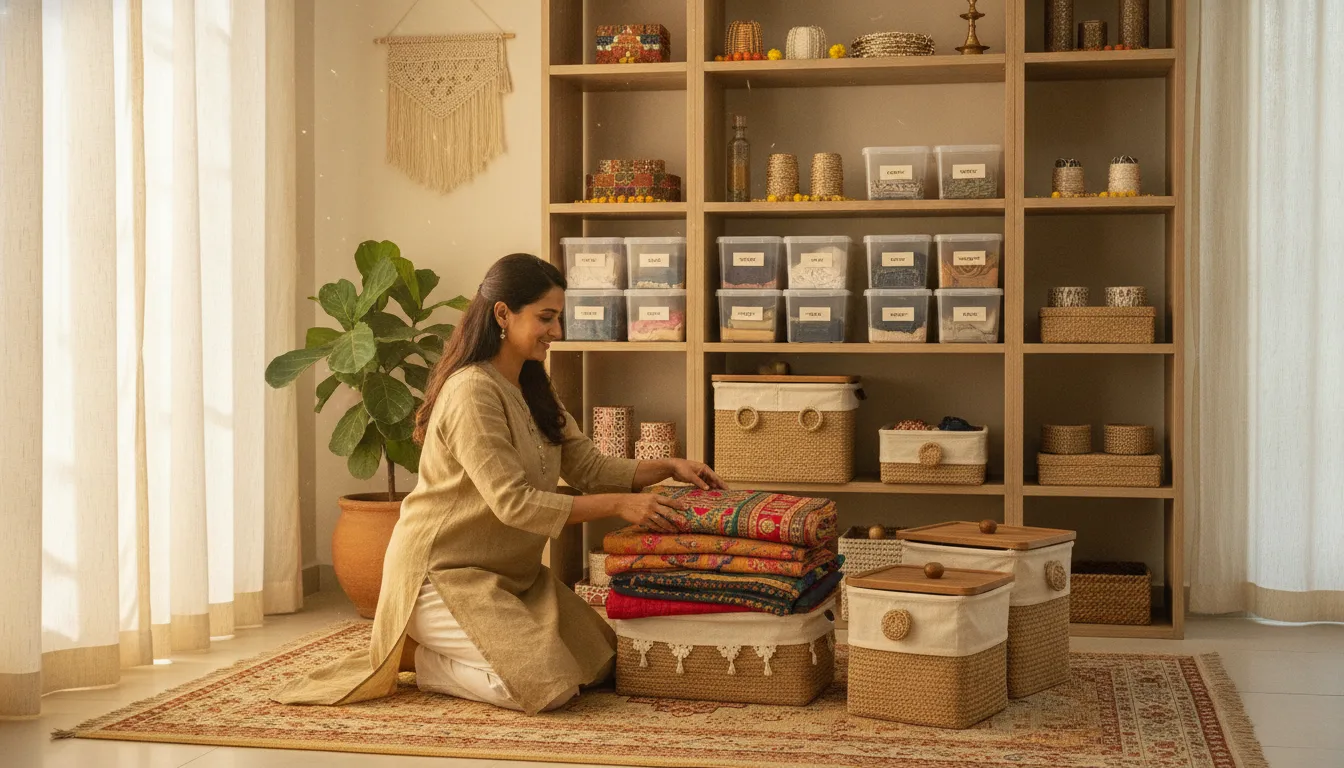
Why Storage Is a Real Problem in Indian Homes
Most Indian apartments weren't built with storage in mind. A typical 2BHK has to hold everything from bulky razais and festival decor to school bags and extra utensils. Add in the tendency to keep things "just in case" and you end up with wardrobes that won't close, shelves that collect dust, and stuff shoved under beds with no real system.
This isn't a lifestyle problem. It's a practical one. And it has practical solutions - none of which involve buying more shelves or renting a storage unit.
The Real Cost of Unorganised Storage
Bad storage doesn't just look messy. It actually costs you money and time. Woolens that aren't stored properly attract moths. Festival clothes left in open shelves gather dust and need rewashing before every use. Bulky razais stuffed into almirahs take up space that could hold three times the items if stored flat and compressed.
Then there's the humidity problem. In cities like Mumbai, Chennai, or Kolkata during the monsoon, moisture gets into everything - fabric, shoes, bedding. If your storage doesn't account for Indian weather patterns, you're fighting a losing battle against mildew and musty smells year-round.
Start With a Category Sort, Not a Room Sort
The most common mistake when organising storage is going room by room. You move things from the bedroom to the hall cupboard, then realise you need to sort the hall cupboard first, and suddenly three hours have passed with nothing done.
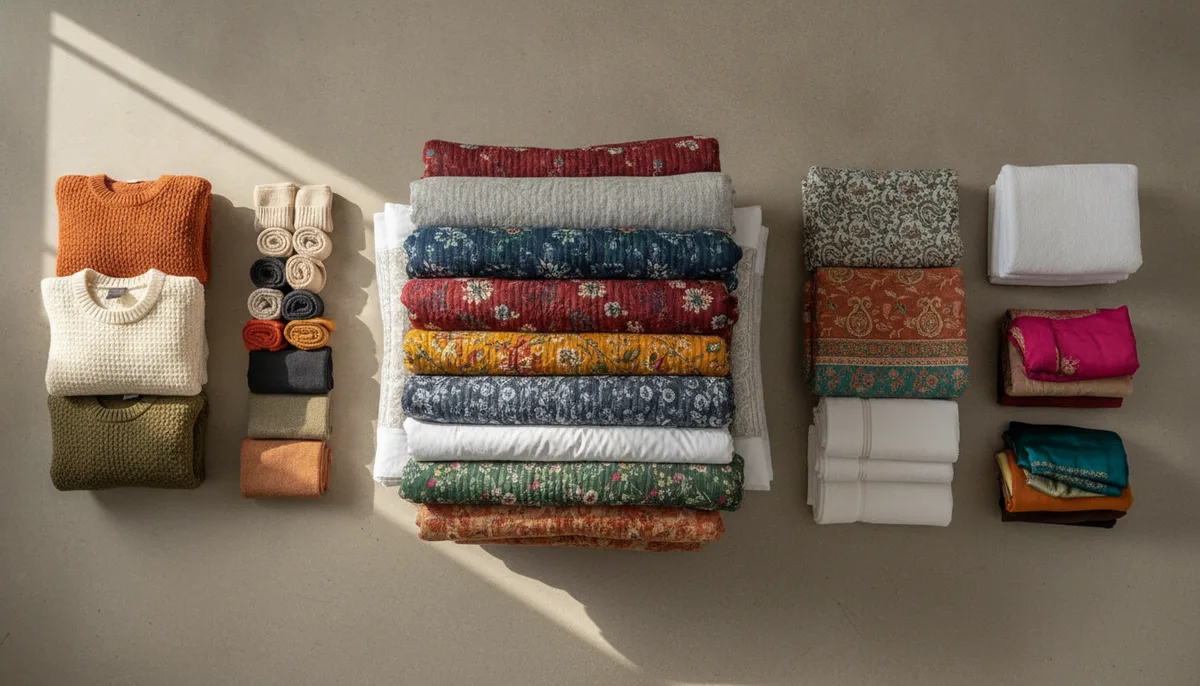
Instead, sort by category. Pull out everything in one category - say, all bedding - from every room at once. Then decide what stays, what goes, and how to store what remains. This gives you a realistic picture of how much you actually own and makes it easier to pick the right storage solution.
Categories to work through in most Indian homes:
- Bedding (razais, blankets, extra pillow covers)
- Seasonal clothing (woolens, rainwear)
- Festival and occasion wear
- Kids' items (clothes they've grown out of, toys, school supplies)
- Kitchen extras (appliances used rarely, extra utensils, dabba sets)
- Documents and papers
Bedding and Woolens: The Space Problem
Razais and thick blankets are probably the single biggest storage challenge in Indian homes. They're used for maybe four months of the year in most cities, and for the rest of the time they sit somewhere taking up space.
Folding them and piling them on a shelf is the standard approach - and it's inefficient. A thick razai folded takes up roughly the same volume as six to eight sets of regular clothing. Compress it down and that same razai fits into a fraction of the space.
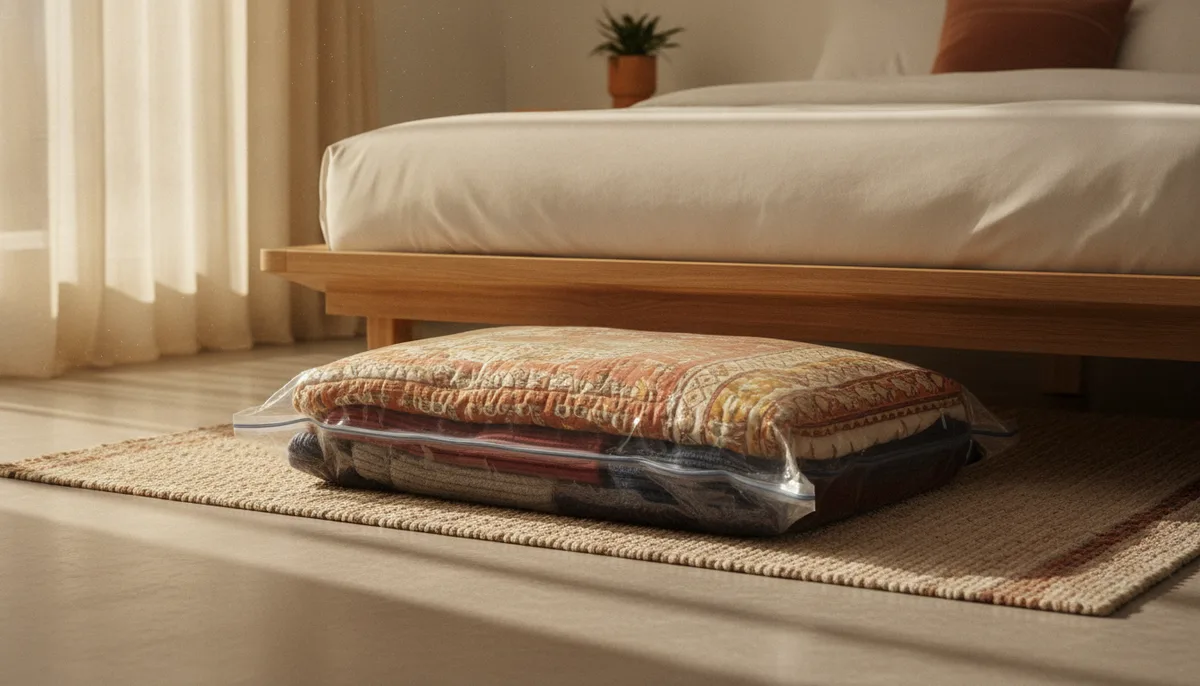
This is where vacuum storage genuinely earns its place. A Vacuum Storage Bag with Pump lets you compress razais, winter jackets, extra pillows, and thick blankets to a flat, manageable size. The included pump removes air quickly - you're not sitting there with a vacuum cleaner for twenty minutes. The bags are airtight and moisture-resistant, which matters a lot during the monsoon when wardrobes can get damp inside.
Store compressed bags under the bed, on top of the wardrobe, or in the top shelf of an almirah. Items that were taking up three shelves can now fit on one.
Seasonal Clothes: What to Rotate and When
Most Indian households have at least two distinct clothing seasons - warm-weather clothes and woolens. Keeping everything out all year means hunting through sweaters in April and shorts in December.
A simple rotation system works well. At the end of each season, wash everything that needs washing, let it dry fully (especially woolens - putting away damp fabric is how you get mildew), and then store off-season clothes in a separate container or section. Vacuum bags work well here too - a full bag of winter clothes takes up minimal space in the bottom of a suitcase or under a bed.
For festival and occasion wear - silk sarees, sherwanis, lehengas - use cloth covers or breathable bags rather than plastic. These clothes need to breathe. Plastic traps moisture and can damage delicate fabric over time.
The Loft and Under-Bed Problem
Two storage spaces that almost every Indian home has and almost nobody uses properly: the loft (or top shelf) and under the bed.
The loft typically becomes a graveyard for things no one wants to deal with - old electronics, boxes from appliances, things you meant to give away. Once a year, pull everything down. If it hasn't been used in twelve months and has no sentimental value, it goes. What remains should be in labelled boxes or bags so you can find it without unpacking everything.
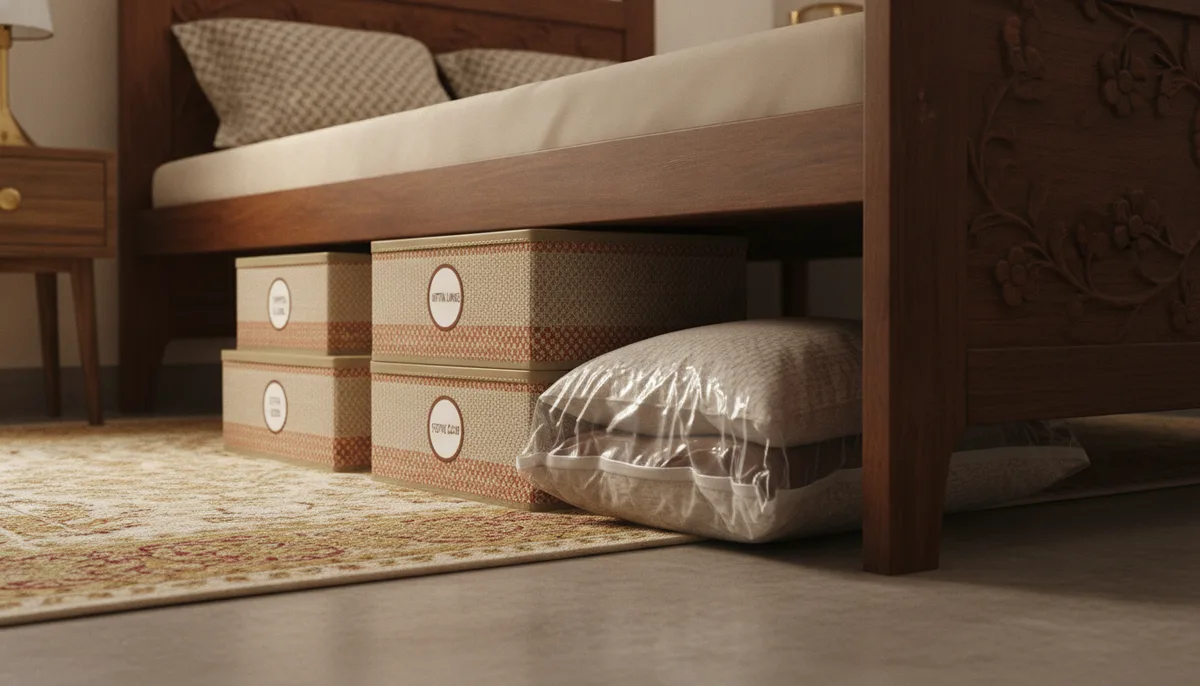
Under the bed is prime real estate for flat, compressed items - vacuum bags of bedding, suitcases that hold off-season clothes inside them, spare bedsheets in flat containers. Invest in shallow storage boxes with lids if the space is deep enough. Keeps dust out and lets you slide things in and out easily.
Kitchen Storage: The Forgotten Clutter Zone
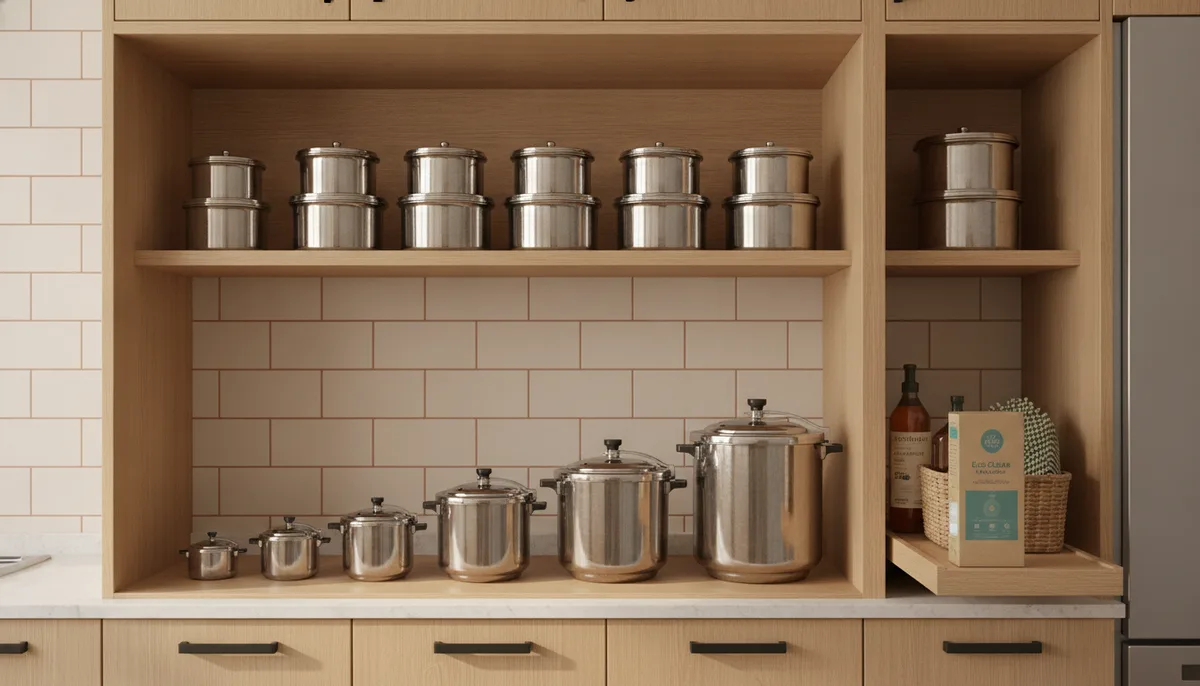
Kitchen clutter in Indian homes is its own category. Pressure cookers in multiple sizes, steel dabba sets, appliances used twice a year (idli makers, paniyaram pans, pasta machines) - they all pile up.
A few principles that help:
- Stack smartly. Heavy items at the bottom, lighter ones on top. Nested stacking for bowls and dabbas saves space.
- Use vertical space. A second tier shelf insert inside a cabinet doubles usable space without any drilling.
- Store rarely-used appliances out of prime cabinet space. The mixer-grinder used daily gets the accessible spot. The paniyaram pan used at festivals goes to the back or the top shelf.
One thing that often gets overlooked in kitchen organisation: cleaning supplies. Cluttered cleaning shelves mean you can't find what you need, so you buy duplicates. Keep a dedicated spot - under the sink or a single cabinet - with only what you actually use regularly. If you're switching to more compact cleaning formats like Laundry Detergent Sheets instead of bulky liquid bottles, you'll free up significant shelf space immediately. A single pack replaces a 2-litre bottle and stores flat in any drawer.
Maintaining It: The Five-Minute Daily Reset
The reason storage systems fall apart isn't that they were badly designed. It's that nothing gets put back where it came from. One week of ignoring the system and you're back to piles.
A five-minute reset at the end of the day prevents this. It's not cleaning - it's just returning things to their places. The TV remote goes back to the drawer. The school bags hang on their hooks. The razai that was dragged out for a nap gets folded back.
If it takes longer than five minutes, the system isn't working. Either there are too many items (time to declutter again) or the storage spots are too far from where things are actually used (time to reorganise).
What Good Storage Actually Looks Like
Good storage in an Indian home isn't about matching containers or colour-coded shelves. It's about finding things quickly, protecting them from dust and humidity, and not having to reorganise every few months because things keep piling up.
The practical toolkit for most homes is simple: a few vacuum bags for bulky items, some shallow under-bed containers, labelled boxes for the loft, and a commitment to the category-sort method once a season. That's it.
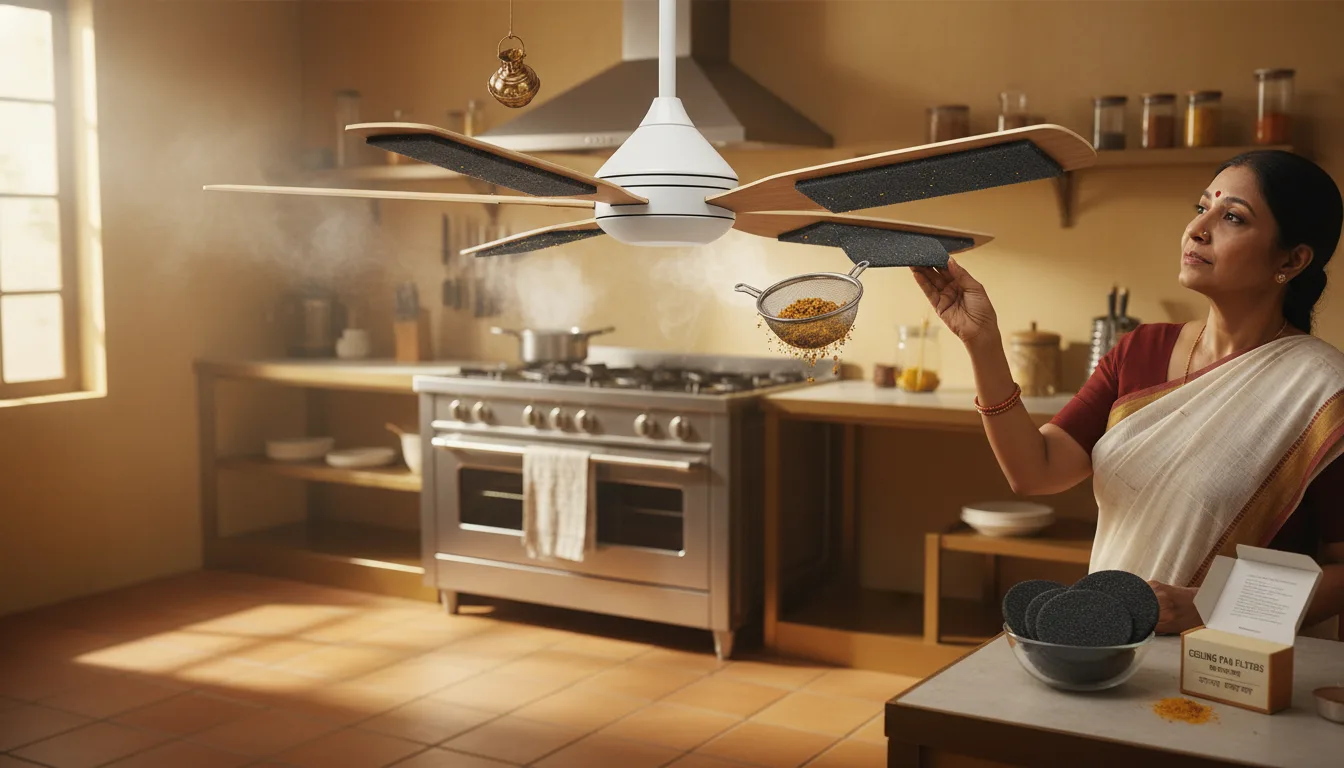
If you're dealing with specific dust or air quality issues in storage areas - especially near ceiling fans that push dusty air around - adding Activated Charcoal Ceiling Fan Filters helps reduce the dust that settles on stored items in open shelves. Less dust means less rewashing before use.
Start small. Pick one category, sort it properly, store it well. That's more useful than a whole-house reorganisation that doesn't get finished.