Why Your Fridge Needs More Attention Than You Think
Most Indian households treat fridge cleaning as a once-in-a-while task - something you do when the smell becomes impossible to ignore. But with the volume of food we store (cooked leftovers, fresh produce, pickles, curd, marinated meats), the fridge interior gets messy faster than a kitchen counter. Spills congeal. Moisture builds up in humid months. Pickle oil leaves a film on shelves that gets stickier with every jar you pull out.
This guide covers how to actually deep clean a fridge - not just wipe it with a wet cloth, but get to the drawers, seals, shelves, and walls properly - so it stays clean longer and doesn't smell like last Tuesday's fish curry.
What You Need Before You Start

You don't need a shelf full of products. Keep it simple:
- Warm water
- A few drops of dish soap or a mild cleaning concentrate
- A good microfibre or absorbent cloth
- A soft sponge for shelves and walls
- An old toothbrush or narrow brush for the door seals and hinges
- A dry cloth to finish
If you have access to a Sutra Cleaning Kit, the concentrate works well diluted for fridge interiors - it cuts through grease without leaving a harsh chemical smell behind, which matters a lot when you're cleaning something that stores food. Alternatively, a very small drop of dish soap in warm water does the job for most surfaces.
One thing to avoid: don't use anything abrasive on the glass shelves or plastic drawers. They scratch easily and those scratches harbour bacteria over time.
Step 1: Empty and Sort
Take everything out. Yes, everything. Don't just push things to one side and wipe around them - that defeats the point.
As you pull things out, check expiry dates and toss anything that's past it. In Indian kitchens, this step alone is often an eye-opener. Half-used chutneys, forgotten curd containers, vegetables that went soft at the back of the drawer - all of it needs to go before you clean.
Place perishables in a cooler bag or clean your fridge quickly enough that nothing sits out for more than 30-40 minutes. In summer, work fast.
Step 2: Remove All Removable Parts
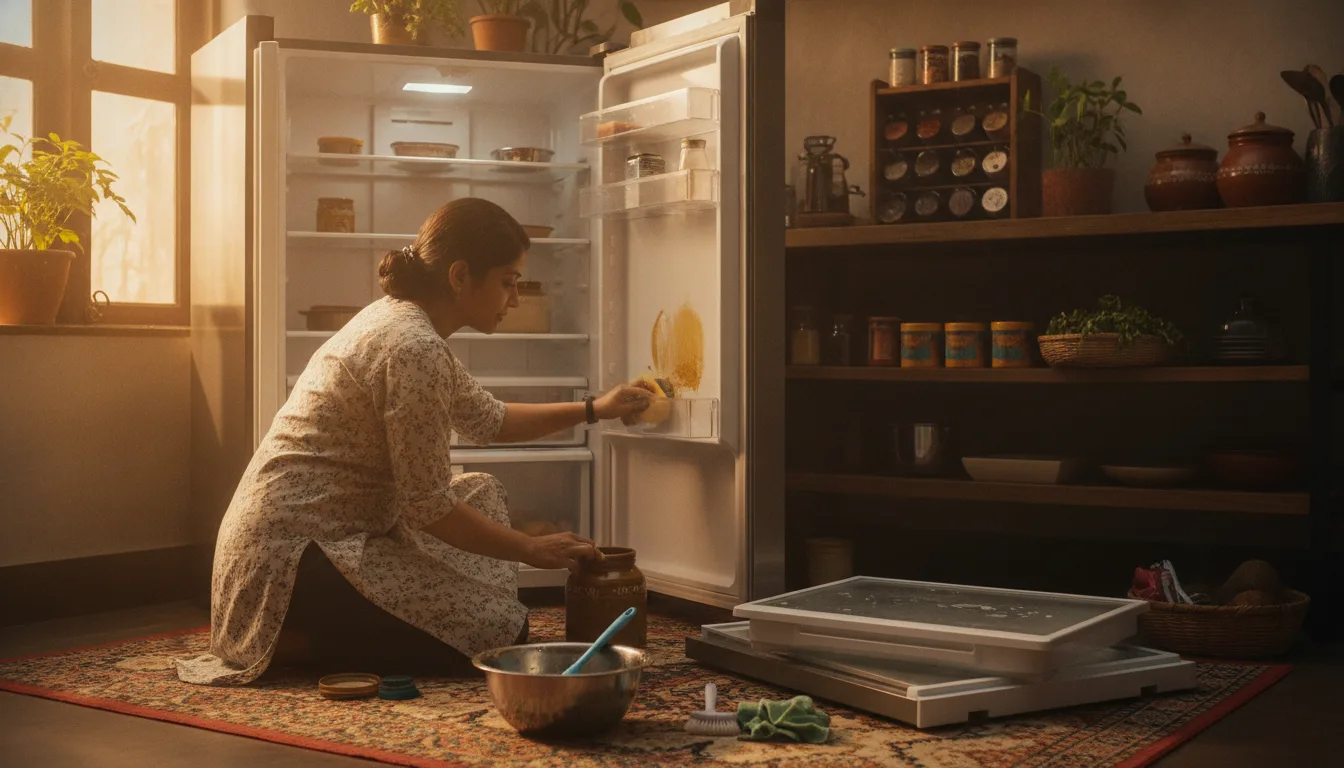
Pull out every drawer, shelf, and tray you can remove. Most fridge shelves slide out once you lift the front edge slightly. Drawers usually lift and pull forward.
Let glass shelves sit at room temperature for 10 minutes before washing them with warm water - glass can crack if it goes from cold to hot too quickly. Wash the drawers and shelves in your sink with dish soap and warm water, rinse thoroughly, and set them aside to dry.
While they dry, you can start on the interior.
Step 3: Clean the Interior Walls and Floor
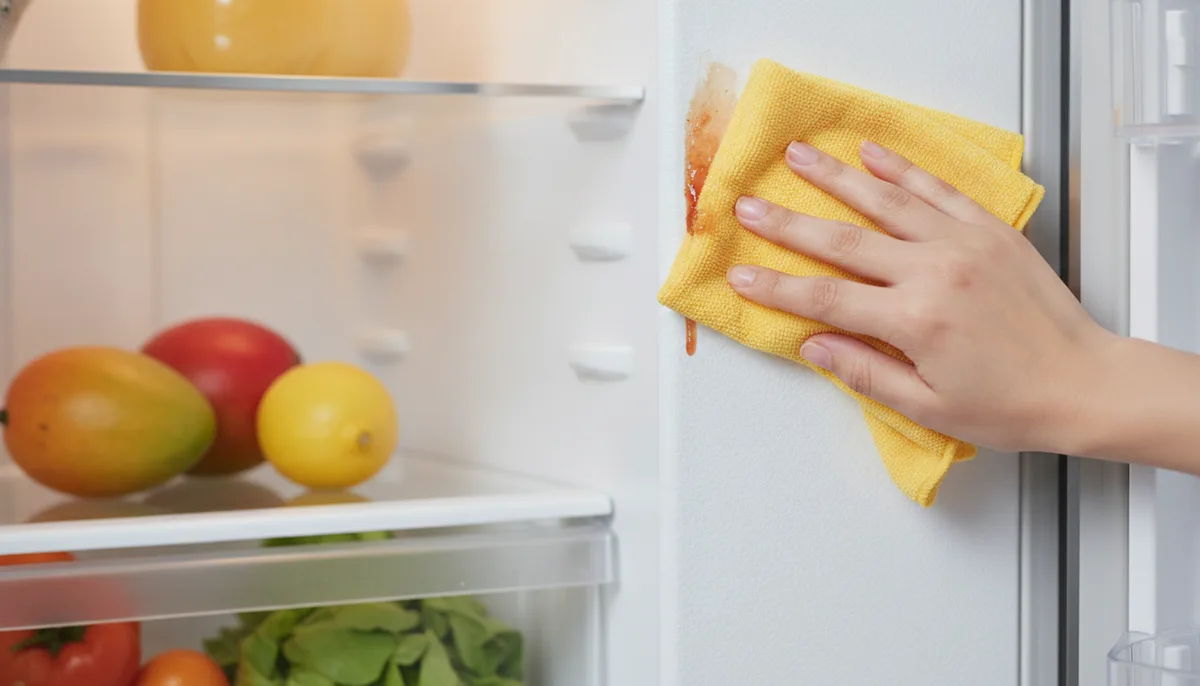
This is where a Space Cloth makes a real difference. The texture grips dried spills and absorbs liquid without pushing it around - which is exactly what you want on the uneven, ridged interiors of most fridges. Wipe top to bottom: start with the ceiling of the fridge, then the side walls, then the floor. This way any drips fall onto a surface you haven't cleaned yet.
For sticky spots, let the damp cloth sit on the area for 30 seconds before wiping. Pickle oil stains and congealed dal drips usually lift easily once they've softened slightly.
Pay attention to the shelving tracks - those horizontal grooves where shelves slot in. They collect crumbs and dried liquid and get ignored in every casual wipe-down. A narrow brush or even a folded cloth pushed into the groove with your finger works well here.
The Door Seal: The Part Everyone Forgets
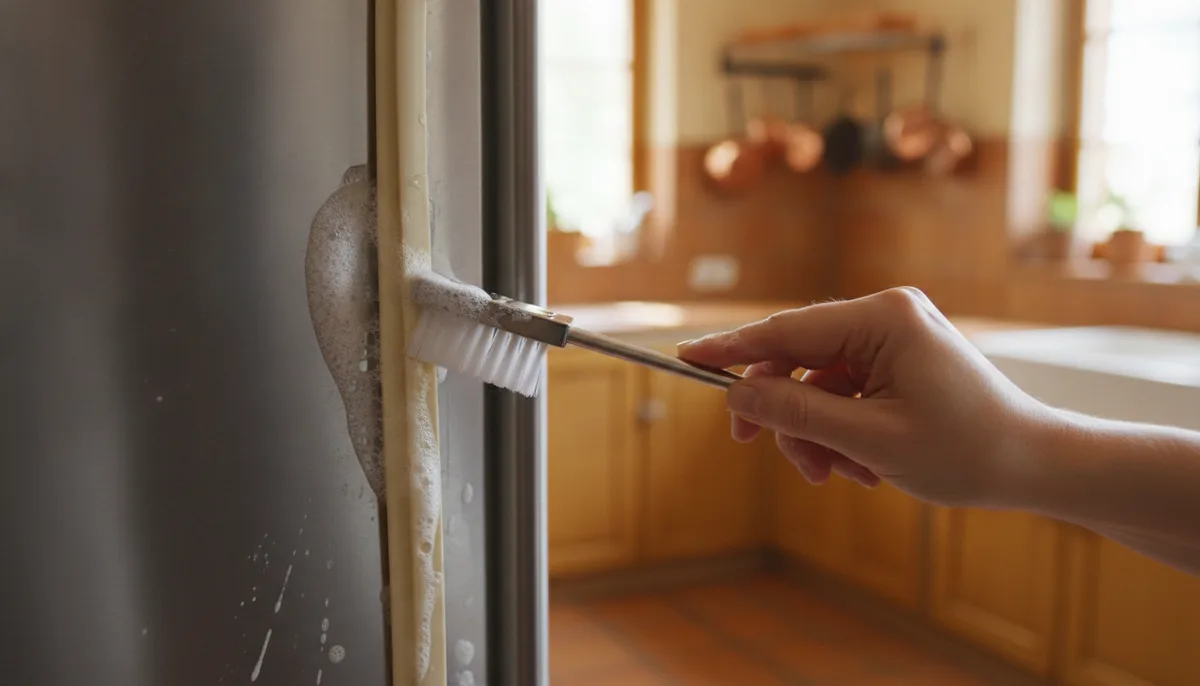
Run your finger along the rubber door gasket that runs around the edge of your fridge door. Chances are there's black mould or mildew in the folds, especially if you're in a city that gets humid during the monsoon - Mumbai, Chennai, Kolkata, coastal Karnataka. This seal is one of the most hygiene-critical parts of the fridge and it almost never gets cleaned.
Use an old toothbrush or a Crevice Brush dipped in soapy water to work into the folds of the gasket. Wipe down with a clean damp cloth after scrubbing, then dry it thoroughly. Moisture left in the seal is what causes the mould to come back quickly.
If the seal has gone completely black and the mould doesn't shift, a small amount of baking soda paste (baking soda plus water) left on for a few minutes before scrubbing usually helps. After cleaning the seal, check that it's still flexible and sealing properly when you close the door - a poor seal drives up your electricity bill.
Dealing With Fridge Odours
Odour in a fridge is usually one of three things: something that's gone bad and hasn't been found yet, a residue from a spill that wasn't cleaned properly, or absorption of strong-smelling foods like fish, garlic, or leftover curry.
Once the fridge is clean, the smell usually reduces significantly on its own. But if there's a persistent background smell, a small bowl of baking soda left open in the fridge absorbs it over 24-48 hours. Some people also use a piece of dry bread or activated charcoal for the same effect.
To prevent odour long-term, store strong-smelling foods in airtight containers rather than loosely covered bowls. Cooked fish and meat especially - cover them properly. And clean up spills as they happen rather than letting them sit until the next deep clean.
Cleaning the Freezer
If your fridge has a separate freezer compartment, it needs its own session. Frost buildup on the walls is normal but once it gets thick, it reduces efficiency. Most modern fridges are frost-free, but the freezer floor still collects drips and ice.
Empty the freezer, let any ice melt naturally (never use a sharp object to chip at it), and wipe down the walls and floor once it's thawed. Dry it completely before switching the fridge back on.
Putting It All Back - and Keeping It Clean
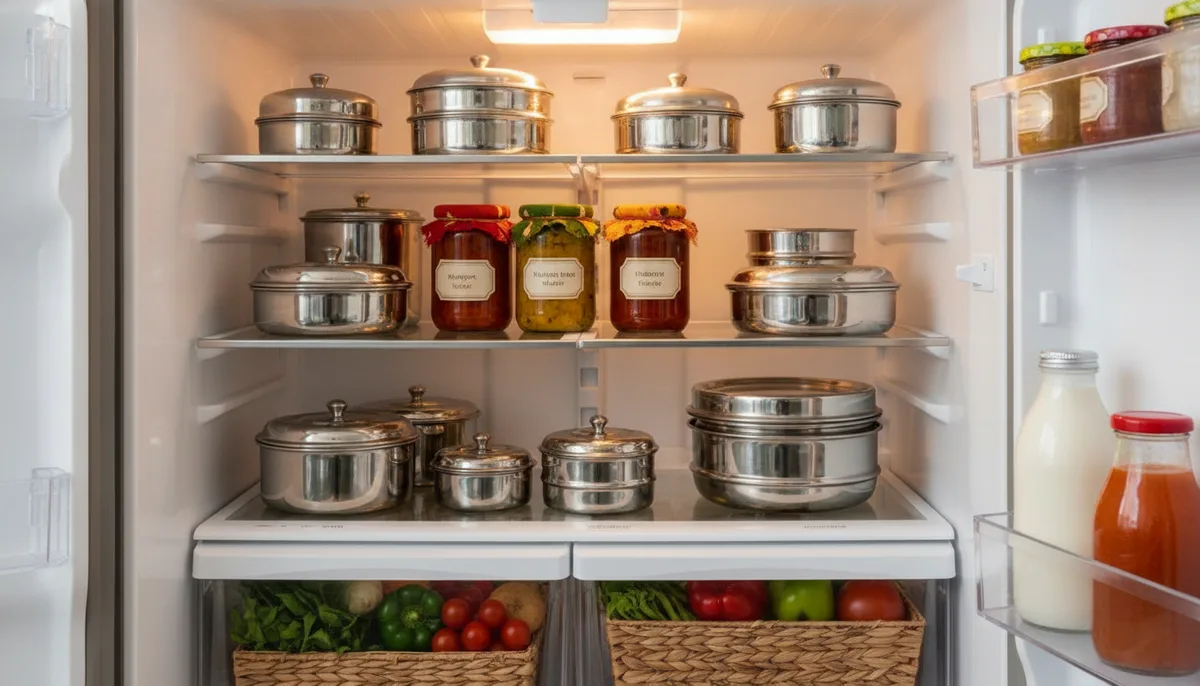
Before you reload, take a minute to think about how things are organised. In most Indian kitchens, the fridge ends up as a random collection of whatever fits - which makes spills more likely and cleaning harder. A few simple habits help:
- Keep a dedicated shelf for cooked leftovers, covered with lids or cling wrap
- Store pickles and chutneys in one section, upright, with their lids tight
- Keep raw meat and fish on the bottom shelf so any drip doesn't contaminate other food
- Leave some air gap between items - overcrowding blocks air circulation
Do a quick wipe of shelves every week - just a damp cloth across the surfaces before you put fresh groceries in. It takes two minutes and means you only need a full deep clean every 4-6 weeks instead of every time the smell becomes unbearable.
How Often to Deep Clean
In Indian households, once a month is realistic for a proper deep clean - especially during summer when temperatures are high and food goes off faster. During winter months in cities like Delhi or Pune, where the ambient temperature is cooler, every 6-8 weeks is usually fine.
Around festivals - Diwali, Eid, Christmas - when you're stocking more food than usual, clean the fridge the week before, not after. Starting with a clean fridge means all that extra mithai and cooked food goes into a fresh space and has a better chance of staying good longer.
A clean fridge is just a better-functioning kitchen tool. It keeps food fresher, smells neutral when you open the door, and takes a fraction of the time to maintain once you've done the initial deep clean properly.