Why Dishwashing in Indian Kitchens Is a Different Problem
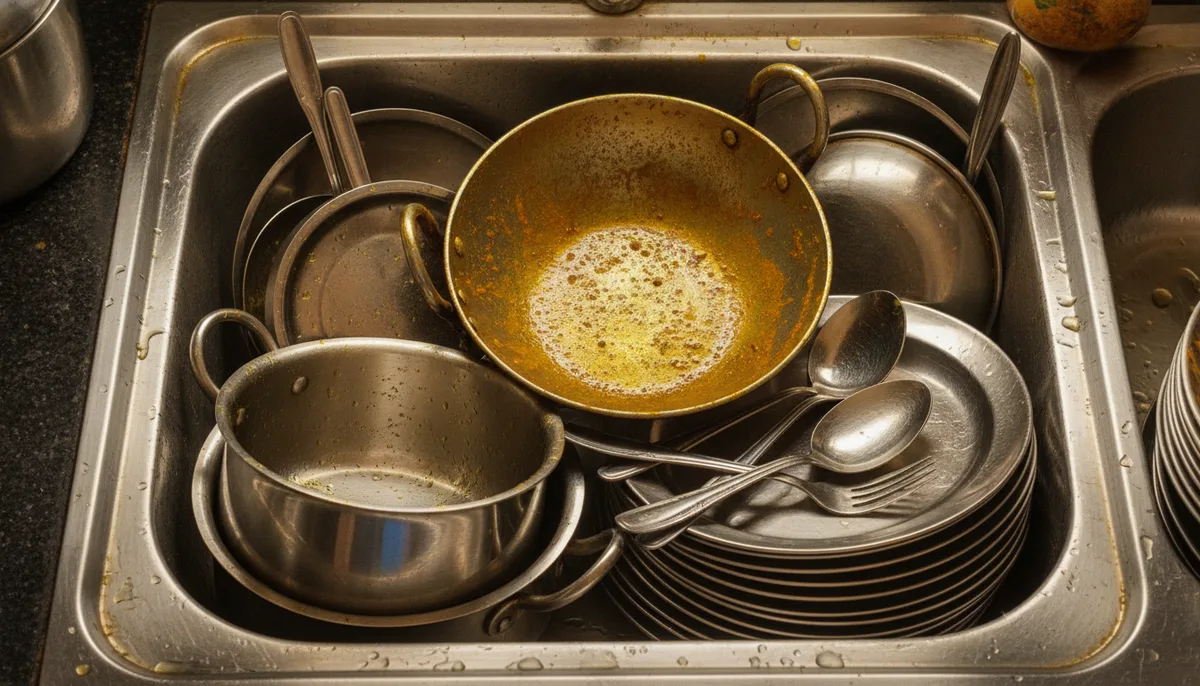
Dishwashing in India is not the same as rinsing a salad bowl after lunch. Indian cooking means heavy oil, tadka residue, turmeric staining, sticky dals, and the kind of greasy build-up that a single pass of a sponge will not fix. Add hard water into the mix - which is the reality in cities like Bangalore, Delhi, and Mumbai - and you get dishes that still look dull and streaky even after washing.
Most cleaning guides skip over this. They assume you are dealing with light food residue and soft water. The result is advice that sounds fine in theory but does not survive the morning after rajma rice.
This guide is specifically for Indian households. The tools matter. The order matters. And a few small changes in your approach can cut dishwashing time significantly while leaving dishes actually clean.
The Main Problems People Run Into
Sponges That Stop Working Fast
A standard sponge picks up grease on day one. By day three it smells. By day five it is spreading bacteria around your dishes more than cleaning them. In Indian kitchens where you are washing off oil and spices every single day, a regular sponge deteriorates fast. Rinsing it is not enough. Most people end up throwing sponges away far too often, which is wasteful and expensive over a year.
Hard Water Leaving Residue
If your glasses look cloudy after washing or your steel vessels have white spots, that is mineral deposit from hard water - not dirt. Regular dish soap does not cut through mineral build-up. Over time this residue becomes a film that makes utensils look permanently grimy even when they are technically clean.
Too Much Detergent, Too Little Result
Most people compensate for ineffective tools by using more soap. This creates a different problem: soap residue on dishes, which then requires longer rinsing, wastes water, and still leaves a faint soapy taste on glassware.
The Right Order for Washing Dishes
Order matters more than effort. Here is the sequence that works for a typical Indian kitchen load:
- Pre-scrape first. Scrape off food solids into the bin before the dish hits the sink. This keeps your scrubber cleaner and your drain clear.
- Soak the oily stuff. Steel kadais, pans with stuck-on residue, and vessels used for curries should soak in hot water for five to ten minutes before you scrub. This loosens the grease and halves your scrubbing time.
- Start with glasses and lighter items. Wash these first when the water and scrubber are cleanest. Grease from heavy pots will contaminate lighter items if you work in reverse.
- Tackle the heavy pots last. After soaking, these should release without much effort. If you are still scrubbing hard, the soak time was too short.
- Rinse in one go. Batch your rinsing rather than rinsing each item individually. It saves water and time.
Choosing the Right Scrubber
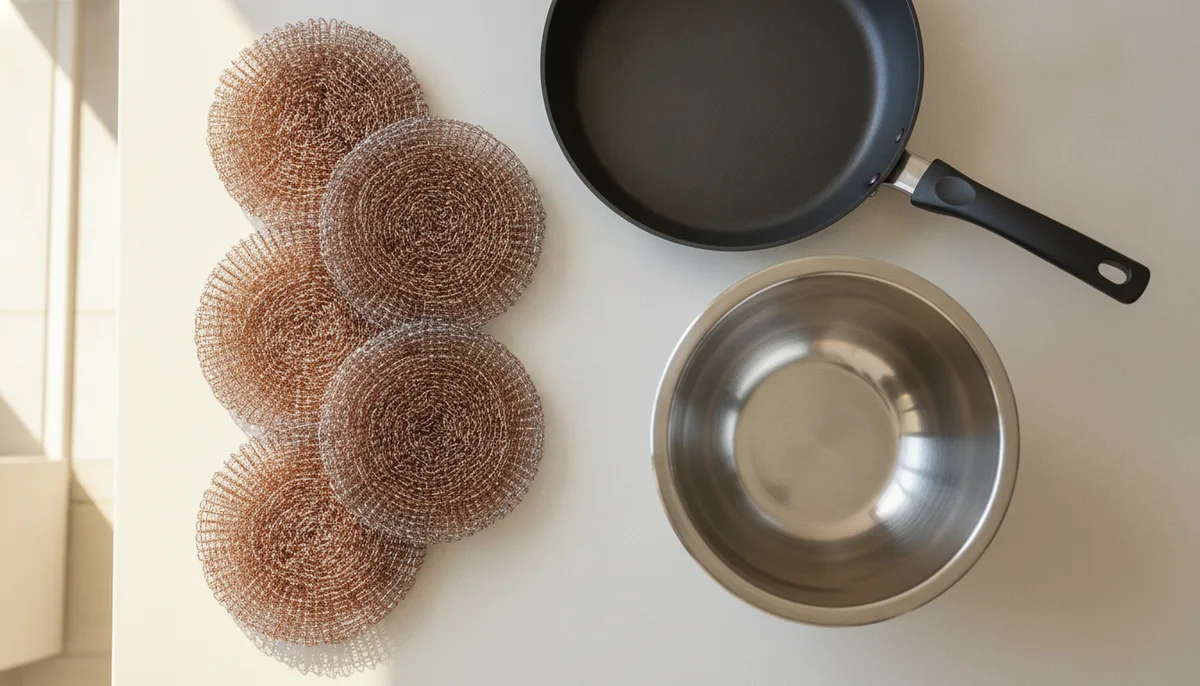
The scrubber or dishwashing rag you use makes the biggest practical difference. For Indian kitchens specifically, you need something that can handle oil without saturating and holding onto it, does not scratch steel or non-stick, and dries fast between uses so it does not develop odour.
Standard kitchen sponges fail at all three. They absorb grease into their core, scratch non-stick if the scrubbing layer is too abrasive, and stay damp for hours.
The Multipurpose Wire Dishwashing Rags are worth looking at here. They are designed for both wet and dry cleaning tasks, rinse off without retaining grease, and work on steel and ceramic without the scratching problem you get from rough scrubbers. A pack of five means you can rotate them through the week and always have a fresh one in use - which also fixes the odour problem.
Dealing With Grease on Indian Utensils
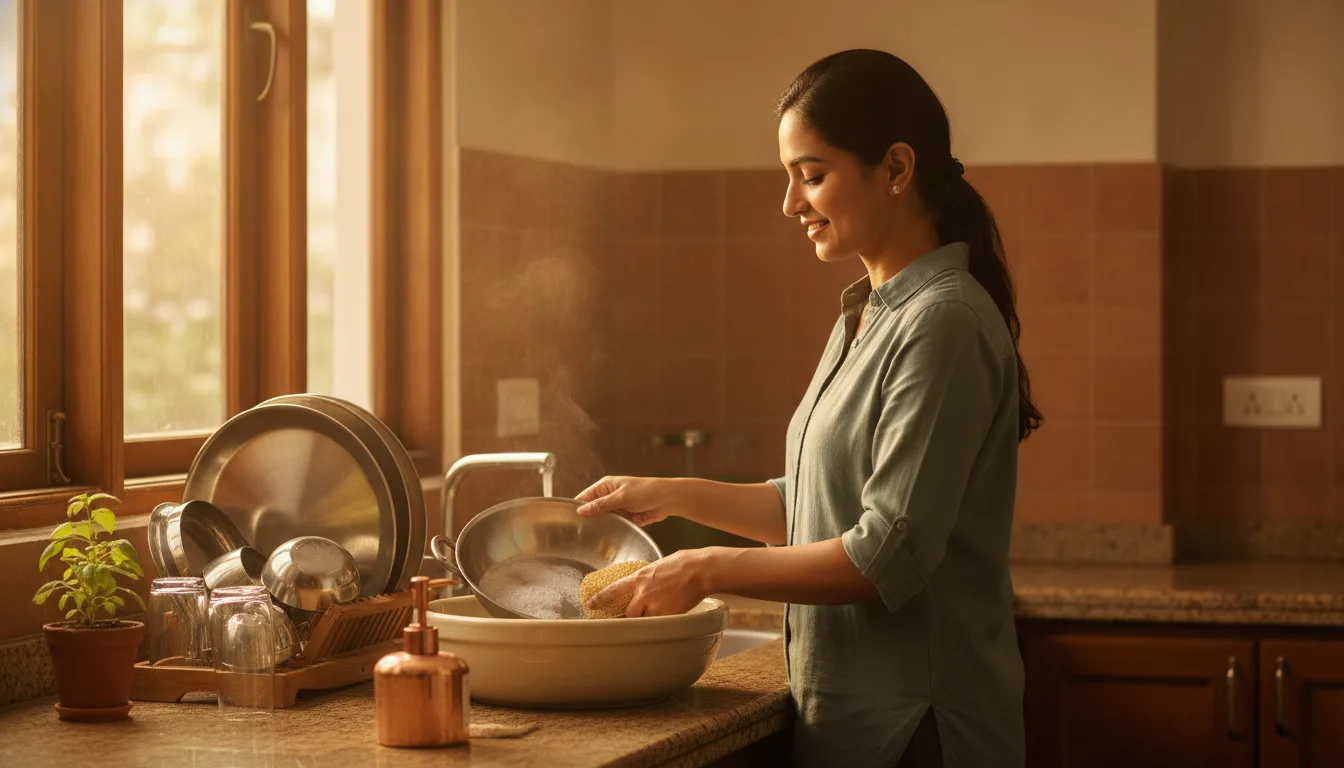
The key to getting oil off without using excess soap is water temperature. Hot water breaks down oil in a way that cold water simply cannot. If your tap does not run hot, keep a kettle nearby and add a splash of boiling water to your wash basin before starting on greasy pots.
For particularly stubborn residue - the kind left after deep frying or making ghee - a small amount of concentrate-style cleaner goes a long way. The Cleaner Concentrate is diluted before use, which means a single bottle covers far more washes than a regular dish soap at similar cost. For heavy grease, use a slightly stronger dilution. For everyday dishes, a weak dilution is enough. You stop over-using soap by default because you are measuring it out anyway.
Hard Water and Your Dishes
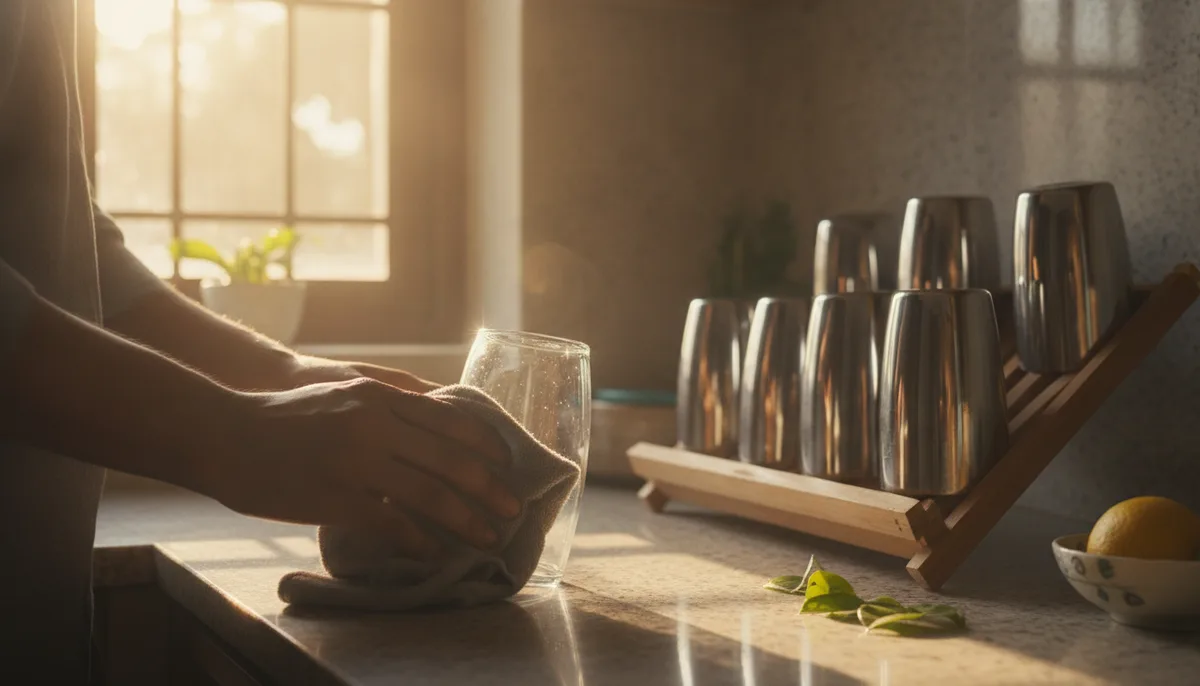
If you live in a hard water area - most of urban India qualifies - add one small step: after rinsing, wipe steel and glassware with a dry cloth immediately rather than leaving them to air dry. This prevents mineral deposits from settling as the water evaporates.
A good Space Cloth works well for this. It absorbs water quickly and does not leave lint behind on glasses or steel, which is the common problem with regular cotton kitchen towels. This one step alone eliminates that cloudy look on glassware without needing any special treatment.
Keeping Your Dishwashing Tools Clean
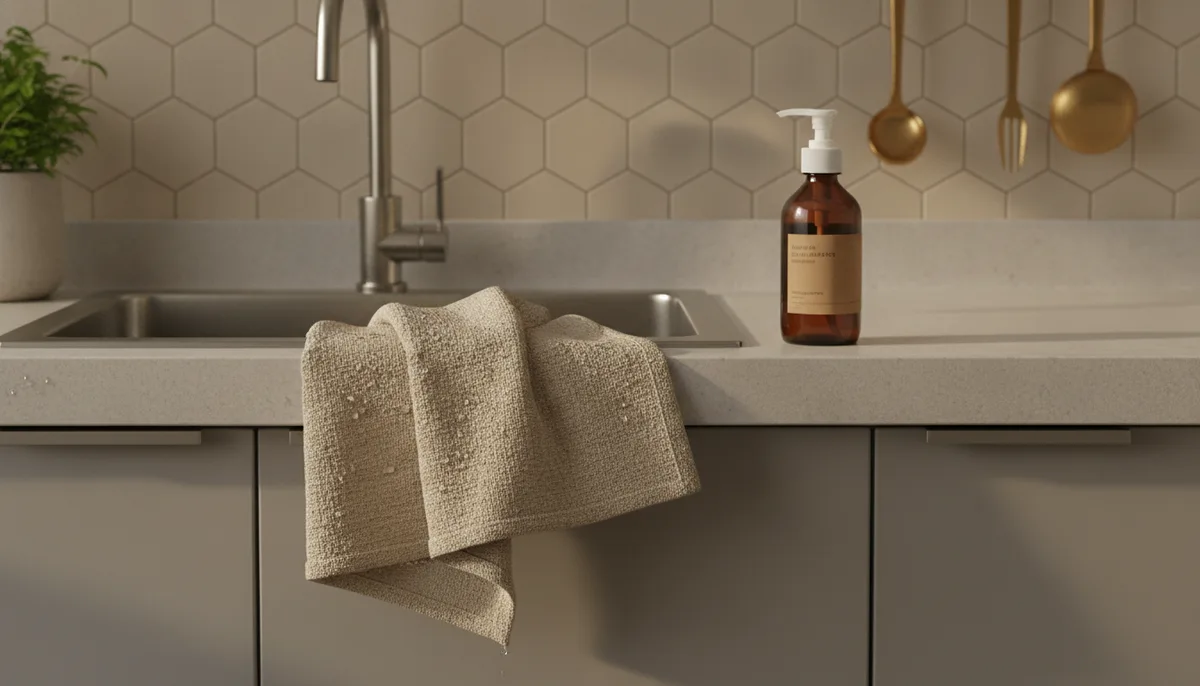
The tool you use to clean your dishes also needs to be cleaned. This is where most people fall short. A scrubber or rag that is not maintained properly becomes a contamination point, not a cleaning tool.
Daily
Rinse your scrubber thoroughly after every use. Squeeze out excess water and hang it somewhere it can air-dry fully - not left sitting in a wet sink. A scrubber sitting in pooled water will smell within 24 hours in India's humidity.
Weekly
Give your scrubbers a deeper clean once a week. You can soak them in hot water with a small amount of the cleaning concentrate for ten minutes, then rinse. This removes embedded grease and resets the scrubbing surface.
When to Replace
If your scrubber smells even after washing, or if it is visibly disintegrating, replace it. Trying to rehabilitate a fully spent scrubber is not worth the effort - especially when working with rags you can rotate through a full pack.
A Few Things That Are Not Worth Doing
A lot of dishwashing advice floats around that sounds helpful but does not hold up in practice. Here are a few things to skip:
- Leaving dishes to soak overnight. A five to ten minute soak is useful. An overnight soak just makes the sink smell and does not actually make the dishes easier to clean in the morning.
- Using abrasive steel wool on non-stick. It will destroy the coating faster than the food residue ever would. Stick to soft scrubbers or dishwashing rags for non-stick surfaces.
- Piling all dishes in at once. The items at the bottom of the pile sit in dirty, greasy water and need to be re-rinsed anyway. Work in smaller batches.
- Using cold water to cut grease. It does not work. Hot water is not optional for oily pots - it is the mechanism that loosens fat molecules from the surface.
Quick Everyday Routine
If you want a practical rhythm that works for a typical two to four person household doing three meals a day:
- Morning: Quick wash of breakfast items right after use - do not let them sit.
- After lunch: Soak heavy items from cooking, wash lighter ones immediately, come back to soaked items in ten minutes.
- After dinner: Same approach. Soak, wash light items, finish with pots. Dry and stack before bed so the sink is clear.
This prevents the end-of-day pile-up that makes dishwashing feel like a chore rather than a two-minute task.
The Bottom Line
Most dishwashing frustration in Indian kitchens comes from three things: the wrong tools, the wrong order, and using too much soap to compensate for both. Fix the tools first. A scrubber that actually releases grease and dries fast, a cloth that handles minerals on steel and glass, and a concentrate cleaner you can dilute properly - these make the rest of it easy. The technique follows naturally once the equipment is not working against you.