Why One Cleaning Method Does Not Work for All Surfaces
Most Indian kitchens and bathrooms have at least four or five different surfaces - stainless steel sinks, marble or granite countertops, ceramic floor tiles, glass shower panels, maybe a mosaic backsplash. Each one has a different texture, porosity, and tolerance for cleaning products.
Use the wrong thing on the wrong surface and you get scratches on polished granite, dull patches on marble, or white residue baked into ceramic grout. This guide covers the most common surfaces found in Indian homes and the most practical way to clean each one without damaging it.
Stainless Steel: The Indian Kitchen Workhorse
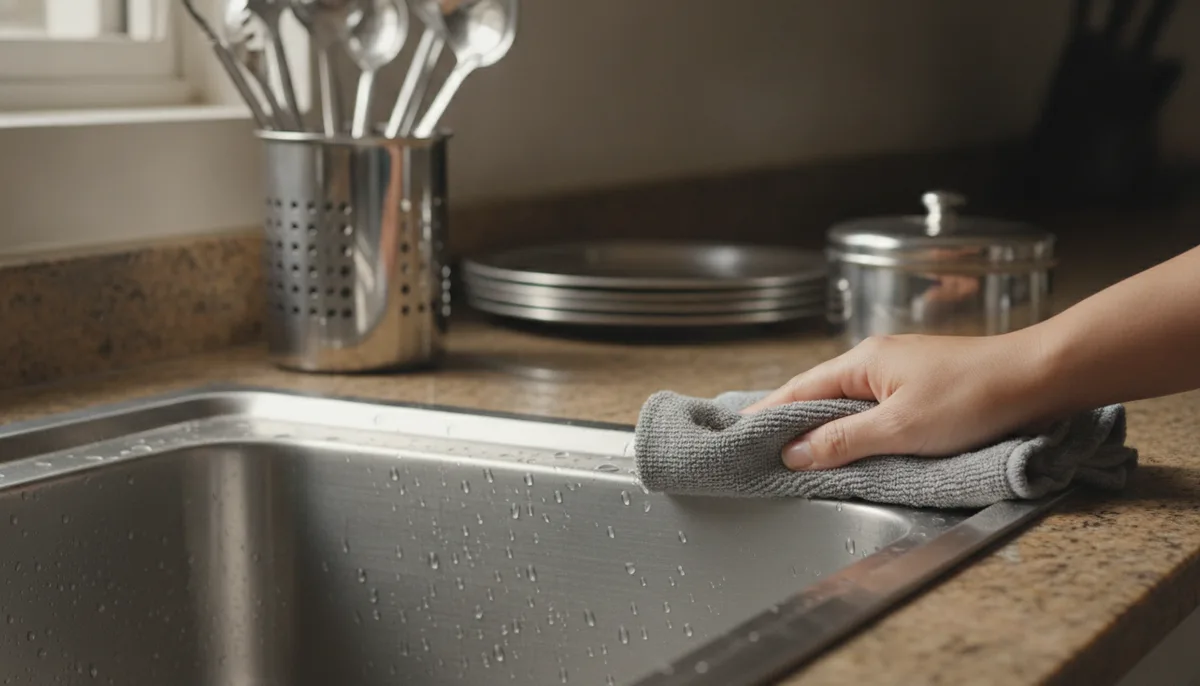
Stainless steel is everywhere - sinks, chimney exteriors, appliance panels, utensil holders. It looks great when clean and terrible when it has fingerprints, water spots, or grease rings.
What Works
- Always wipe in the direction of the grain - you can see the faint lines on the surface. Wiping across the grain creates micro-scratches over time.
- For daily smudges and fingerprints, a damp microfibre cloth is enough. The Space Cloth works well here - it picks up oils and residue without leaving lint or dragging grit across the surface.
- For grease buildup around the sink or chimney, a small amount of dish soap on a cloth works. Rinse and dry immediately - standing water causes those white mineral deposits, especially in cities with hard water like Chennai or Delhi.
- To restore shine after cleaning, buff with a dry cloth using circular motions.
What to Avoid
- Steel wool and abrasive scrubbers - they scratch even high-grade steel
- Bleach-based cleaners - they can cause pitting and discoloration over time
- Leaving wet cloths sitting on the surface overnight
Marble and Granite: Handle with More Care Than You Think
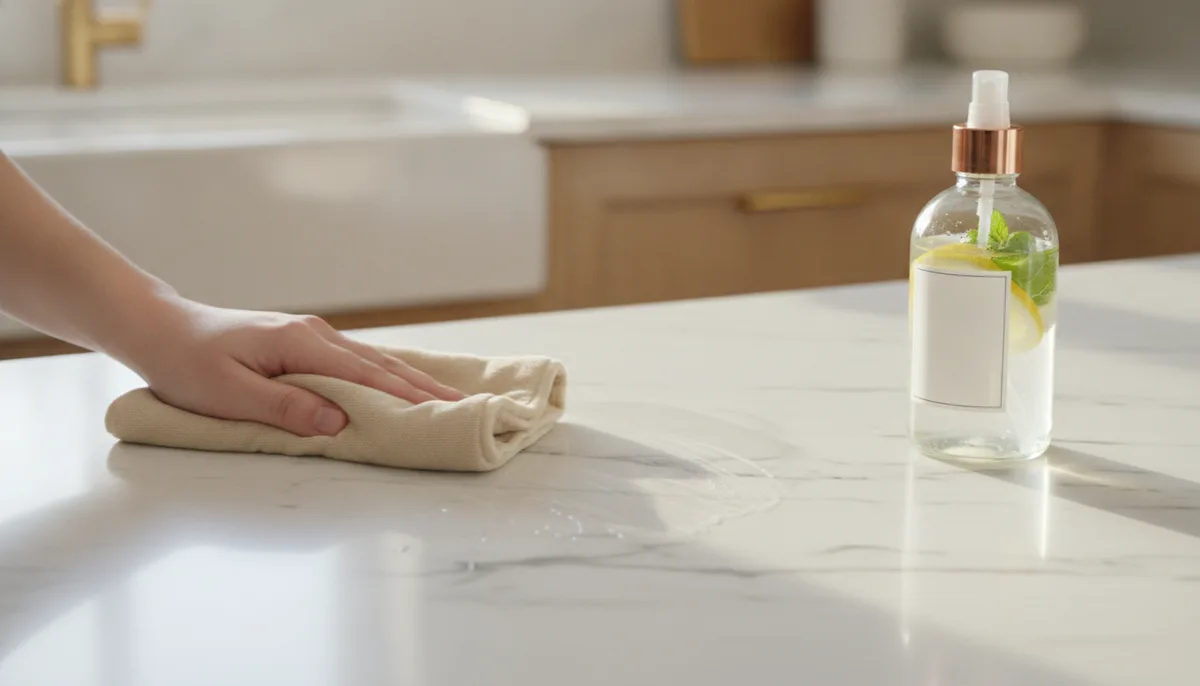
Marble and granite countertops look premium, but they are both natural stones that are more sensitive than people expect. Marble in particular is porous and reacts badly to acid. Granite is harder but still needs careful cleaning.
Marble Surfaces
The biggest mistake with marble is using lemon juice, vinegar, or any acidic cleaner. Even diluted, acid etches the surface and leaves dull patches that are difficult to buff out. This includes many popular "natural" cleaning hacks you might see online.
For daily cleaning, plain warm water with a soft cloth is sufficient. For deeper cleaning, use a pH-neutral cleaner. A concentrate like the Swivo Cleaner Concentrate - diluted appropriately - can work well on marble because you control the concentration. Never use it at full strength and always test a small hidden corner first.
Dry marble surfaces after cleaning. Moisture sitting in the pores leads to staining and, during monsoon season, can encourage mildew in bathrooms with poor ventilation.
Granite Surfaces
Granite is more forgiving than marble but still needs pH-neutral cleaners. It handles most gentle household cleaners without etching. What damages granite over time is abrasive scrubbing - it dulls the polished finish. Use soft cloths and let the cleaner do the work instead of scrubbing hard.
Ceramic and Vitrified Tiles: The Floor and Wall Stalwart
Ceramic tiles are the most common surface in Indian homes - floors, bathroom walls, kitchen backsplashes. They are fairly tough but the grout lines are a different story.
Tile Surface Itself
Glazed ceramic and vitrified tiles are non-porous and easy to clean. Warm water and a mild cleaner handle most daily dirt. For mopping floors, a flat mop system with microfibre pads gives a more even clean than a traditional string mop because the pad stays in full contact with the surface rather than pushing dirty water around.
After mopping, allow tiles to dry fully before walking on them - this is especially important in kitchens where wet tile plus cooking oil equals a slip hazard.
Grout Lines
Grout is porous and stains easily, especially in kitchen tiles where cooking smoke and oil mist settles into every gap. Regular mopping does not clean grout - it mostly moves the dirty water over it.
For grout, you need something that can get into the gap - a narrow stiff brush works well. Paste made from baking soda and water applied to the grout line and scrubbed with a small brush removes moderate staining. For heavier discoloration, a diluted cleaner left to sit for a few minutes before scrubbing makes a visible difference. This is where a concentrate has a practical advantage - you can make a stronger solution for stubborn grout and a lighter one for regular mopping, rather than buying two separate products.
Glass Surfaces: Streak-Free Is Harder Than It Looks

Glass shower panels, kitchen cabinet doors, balcony railings, mirrors, and stovetop glass lids all need regular cleaning and all have the same problem - streaks.
Streaks happen for two reasons: cleaning solution residue left on the surface, or wiping with a cloth that is too wet or too dry at the wrong moment.
The Method That Works
- Spray or wipe a small amount of diluted cleaner onto the glass
- Wipe with a damp microfibre cloth to remove dirt and residue
- Immediately follow with a dry cloth or a second clean microfibre cloth to buff the surface dry
The two-cloth method - one damp, one dry - is the most reliable way to get streak-free glass. A good microfibre cloth is essential here. Cheap cotton rags leave lint and drag moisture unevenly. The Magic Cleaning Cloth is worth using on glass specifically because the weave holds moisture evenly without depositing it in blotches.
In hard water areas, glass shower panels get calcium deposits fairly quickly. A diluted acidic cleaner (safe for glass but not for marble) helps dissolve these. Apply, leave for a couple of minutes, then wipe clean and dry.
Kitchen Surfaces with Heavy Grease: The Special Case
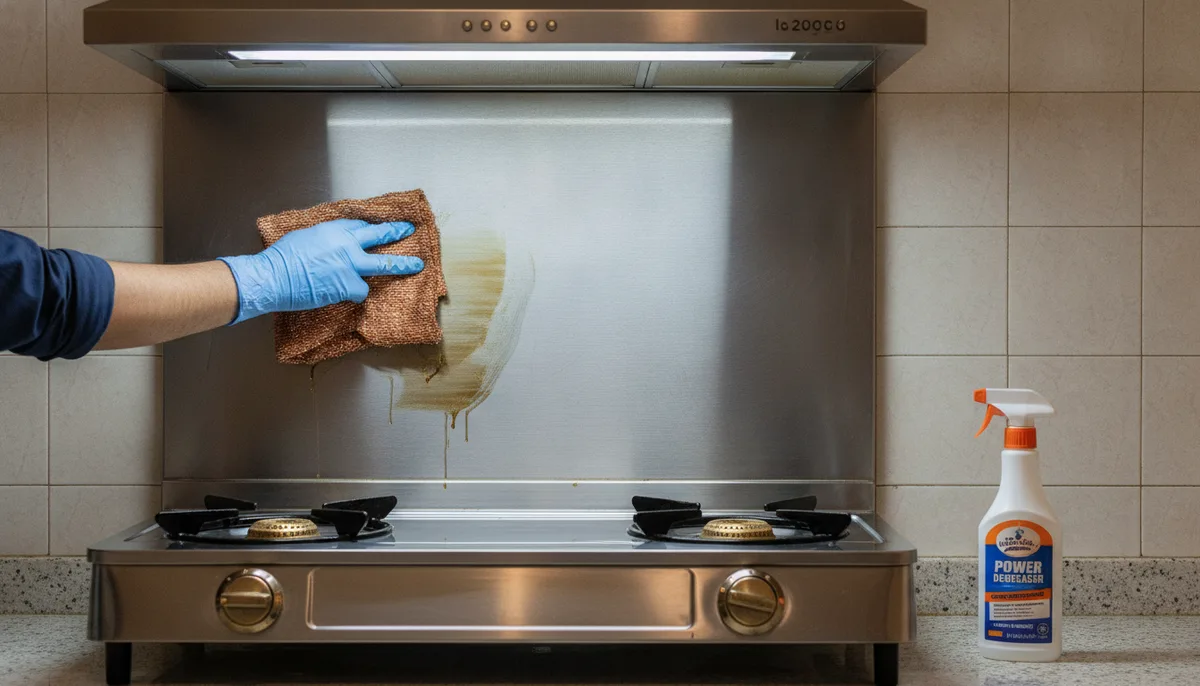
The stovetop surround, the area behind the burners, the chimney hood, and cabinet fronts near the stove all collect a layer of polymerised grease over time - a sticky brown film that regular cleaners barely touch.
This surface is not really a material type - it is a condition. The approach is the same regardless of whether the base surface is steel, tile, or laminate.
The key is dwell time. Apply a degreasing cleaner and let it sit for five to ten minutes before wiping. This breaks down the polymerised grease enough for a cloth to pick it up. Scrubbing immediately after spraying does much less work than waiting.
For the physical scrubbing, you need something with texture - a dishwashing rag or wire cloth gives enough abrasion to shift baked-on residue without scratching most kitchen surfaces. The Multipurpose Wire Dishwashing Rags are designed for this kind of job - enough texture to scrub effectively but not so coarse that they damage tile glazing or laminate finishes.
Laminate and Painted Surfaces
Modular kitchen cabinets with laminate or acrylic finishes need gentle cleaning. No abrasives, no strong solvents, and definitely no scrubbing pads. A damp microfibre cloth with mild cleaner is enough for most daily cleaning. Dry after wiping to prevent watermarks, especially near the sink.
Painted walls need even more care. A barely damp cloth to spot-clean marks is the limit - anything wetter or more abrasive starts lifting the paint. If you are touching up a mark, dab rather than wipe.
A Quick Reference by Surface
- Stainless steel: Microfibre cloth, wipe with grain, dry immediately, no bleach
- Marble: pH-neutral cleaner only, no acid, dry after cleaning
- Granite: pH-neutral cleaner, soft cloth, no abrasives
- Ceramic tiles: Standard cleaner, but grout needs targeted scrubbing
- Glass: Two-cloth method, damp then dry, diluted cleaner
- Greasy surfaces: Dwell time first, then scrub with textured cloth
- Laminate or paint: Barely damp cloth, soft only, dry quickly
The Simplest System: Fewer Products, Right Tools
You do not need a different cleaner for every surface. A good pH-neutral concentrate you can dilute to different strengths handles most surfaces safely. Pair that with the right cloths for the job - soft microfibre for polished stone and glass, more textured options for grease and tile - and you have a practical system that works across your whole home.
The damage most people do to surfaces does not come from neglect. It comes from using the wrong product or the wrong tool with the best intentions. Knowing what each surface tolerates is more valuable than having a cupboard full of specialty sprays.