

Why Indian Homes Collect Dust Faster Than You Think

If you've ever wiped down a shelf and found it dusty again two days later, you're not imagining it. Indian homes deal with a specific combination of factors that make dust control genuinely harder here than in many other places.
Open windows and balcony doors are part of everyday life - especially in cities like Bengaluru, Delhi, and Mumbai. That means road dust, construction particulates, and pollen come right in. Ceiling fans, which run nearly year-round in most parts of India, push that dust into the air and redistribute it across every surface. Add heavy cooking (which releases oil particles that act like glue for dust), and you've got a surface that collects grime faster than a weekly wipe-down can keep up with.
The solution isn't to clean more. It's to build a smarter routine that removes dust before it settles in.
The Weekly Routine That Actually Works
You don't need to reorganise your entire week around cleaning. A consistent light routine beats a chaotic deep clean every month.
Start From the Top
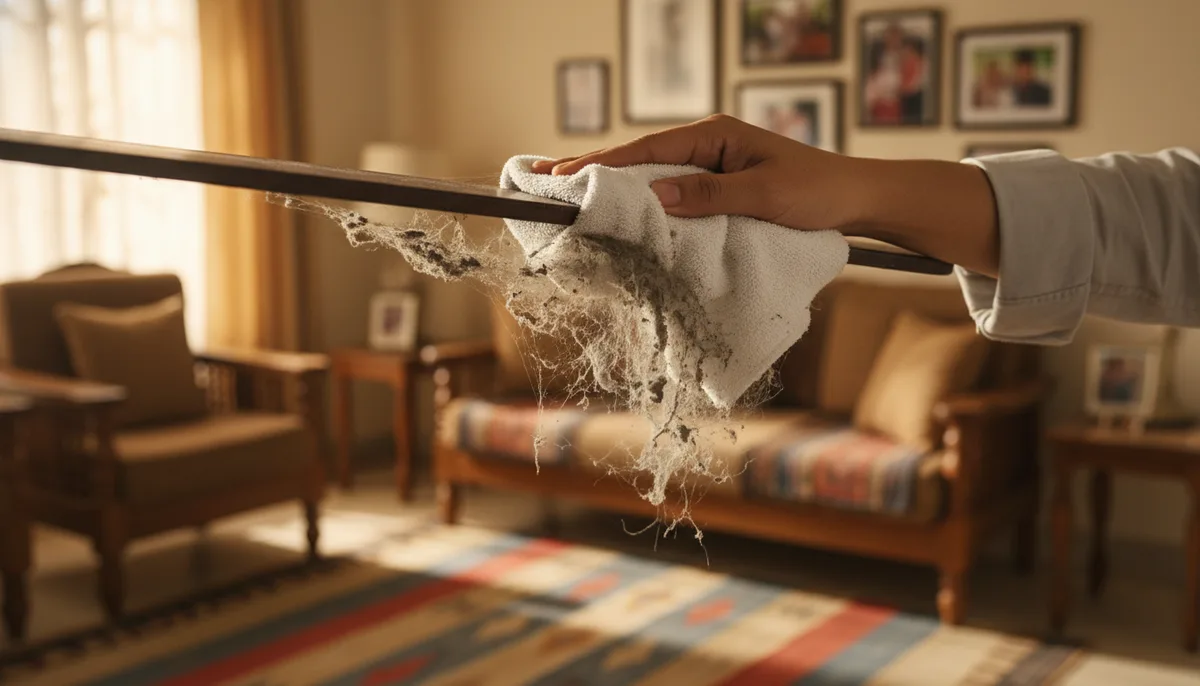
Dust falls. Always work from high surfaces down to the floor, so you're not re-dusting the same spot twice. That means ceiling fans first, then shelves and light fixtures, then furniture surfaces, and finally the floor.
Ceiling fans are the most ignored dust source in most Indian homes. The blades collect thick layers of dust mixed with cooking grease, and every time the fan runs, that mixture circulates in the air. Wiping the blades once a week - or fitting your fan with Activated Charcoal Ceiling Fan Filters - can noticeably reduce how much dust settles on your furniture below.
Use the Right Cloth for Each Surface
Dry dusting with a regular cloth or feather duster just moves dust from one place to another. You need something that actually traps it.
Microfibre is the obvious answer, and for good reason. A good microfibre cloth grabs dust electrostatically rather than just shifting it around. The Magic Cleaning Cloth works well here - use it dry on shelves, TV units, and windowsills to pick up dust without sprays. For glass and mirrors, a light damp pass followed by a dry pass is all you need.
In the kitchen, the challenge is different. Surfaces near the stove collect a mix of dust and grease. A dry cloth won't cut it here - you need something slightly damp with a bit of dish soap, or a concentrated cleaner. Don't skip wiping down cabinet tops and the area above the stove hood, which most people miss entirely.
Don't Forget These High-Dust Zones
- Behind the fridge and under appliances: These spots rarely get cleaned but collect enormous amounts of dust and debris. Pull your fridge out at least once a month.
- Curtain tops and edges: Curtains trap dust on their upper folds. A quick shake outside followed by a vacuum or wipe-down helps significantly.
- AC vents and filters: If you're running an AC, the filter collects dust and then blows it back into the room when clogged. Clean it every two weeks during heavy use months.
- Door frames and tops: Run your hand along the top of any interior door. You'll almost always find a thick layer of dust. This takes five seconds to wipe and makes a real difference.
- Under beds and sofas: These are dust trap hotspots. A flat mop head makes it much easier to reach underneath without moving heavy furniture.
Flooring: The Final Step That Ties It Together
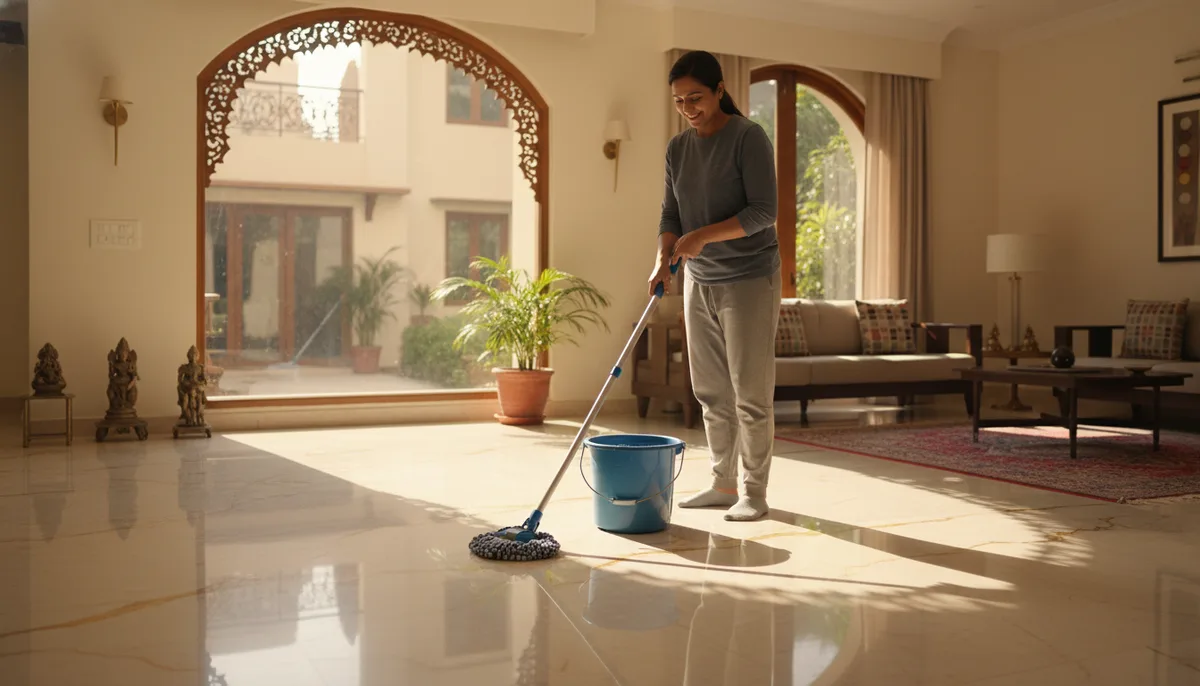
Once you've dusted top to bottom, the floor collects everything that's fallen. The order matters - don't mop before you dust.
For hard floors (which are common across most Indian homes - marble, granite, vitrified tiles), a two-step process works best. Dry sweep or vacuum first to pick up loose particles, then mop with clean water or a light floor cleaner. Using a mop that wrings out properly is more important than most people realise - an overly wet floor on tiles leaves behind a film that actually attracts more dust.
A well-designed Mop and Bucket Set with Wringer makes this step faster and more effective. The wringer controls how much water your mop head picks up, so you're leaving the floor clean and nearly dry rather than wet and streaky.
For rugs and doormats, take them outside and beat them out, or vacuum them thoroughly before the floor gets mopped. A dusty doormat just re-deposits grit every time someone walks in.
How to Reduce Dust at the Source
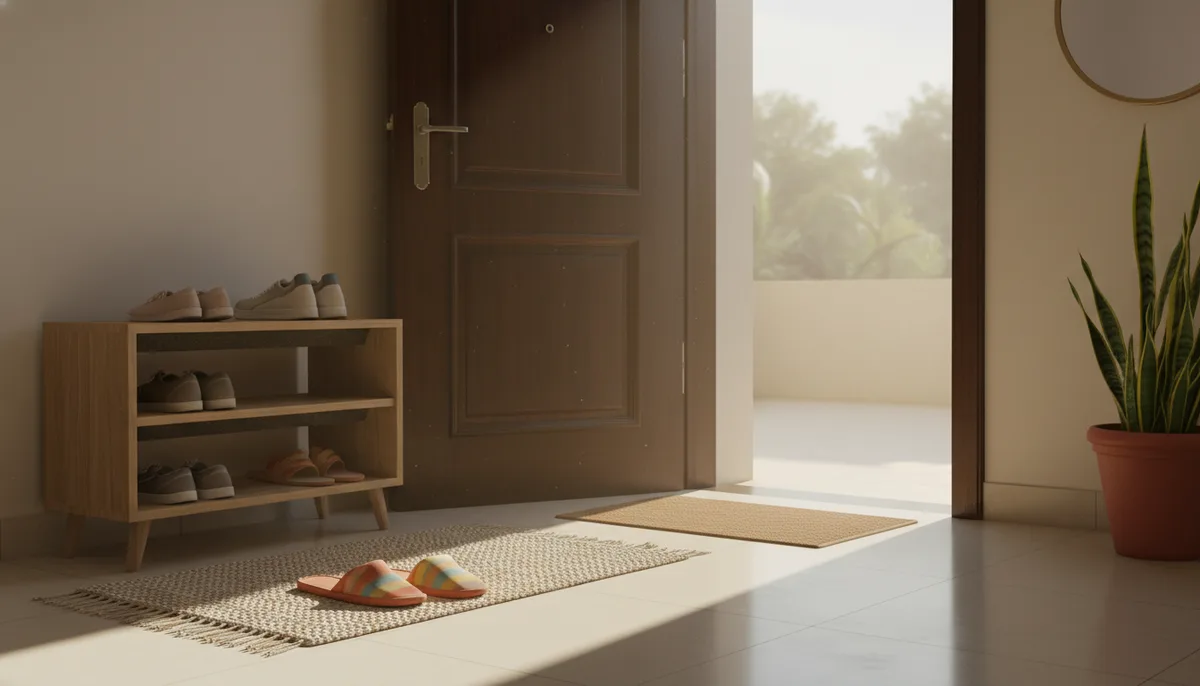
Cleaning is easier when less dust enters in the first place. A few practical steps help here.
Control What Comes In Through Windows
During peak dust seasons - which in North India means the dry months before monsoon, and in South India means certain parts of summer - keeping windows closed in the afternoon when outdoor dust peaks makes a real difference. If you want ventilation, early mornings are typically better.
Mesh screens on windows help filter particulates while still letting air through. They need cleaning themselves every few weeks, but they earn their keep.
Shoes Off at the Door
This sounds obvious, but it's worth being deliberate about. Outdoor footwear tracks in a surprising amount of fine grit and dust. A dedicated shoe rack outside the entrance, combined with indoor slippers, can visibly reduce how quickly your floors get dirty.
Keep Kitchen Grease in Check
Grease from cooking is invisible until it combines with dust to form that grimy film on kitchen surfaces. Running the exhaust fan while cooking reduces how much grease escapes into the air. Wiping down surfaces near the stove daily - rather than waiting for buildup - keeps the layer from getting sticky and hard to remove.
For quick kitchen wipe-downs, the Space Cloth handles light grease and dust together without needing a separate spray cleaner for every pass. It's reusable, so you're not going through a roll of paper towels every week.
Building a Routine You'll Actually Stick To
The most effective cleaning routine is one that's realistic for your household. If you have kids or pets, you'll need to vacuum or sweep more often. If you live alone in a one-bedroom flat, a lighter touch twice a week might be enough.
Here's a simple breakdown:
- Daily (5-10 min): Quick wipe of kitchen surfaces, sweep of high-traffic floor areas.
- Twice a week (15-20 min): Dust shelves, furniture surfaces, ceiling fan blades or check filters. Mop floors.
- Monthly (30-45 min): Pull out furniture and appliances to clean behind them. Wash curtains or shake them out. Clean door frames, tops, and vents.
This approach avoids the cycle of neglecting cleaning until things get visibly bad, then spending an entire Sunday catching up. Small, consistent effort is both less exhausting and more effective.
Dust will always come back. That's just the reality of living in India with open kitchens, fans, and busy streets nearby. The goal isn't to eliminate it - it's to stay a step ahead of it with tools and habits that make the job quick and consistent.