

Why Seasonal Clothes Storage Is a Bigger Problem Than You Think
Most Indian homes deal with a specific frustration: wardrobes stuffed with clothes for the wrong season. Your heavy woollens are taking up prime shelf space in April. Your cotton kurtas are buried under shawls in December. When the season finally turns, you pull things out and half of them smell musty, have mysterious stains, or have been eaten through by silverfish.
This isn't about being disorganised. It's about not having a system that fits how Indian households actually work - sudden weather changes, joint family spaces, limited wardrobe square footage, and the fact that our seasons don't follow a neat Western calendar. Bangalore might need a light jacket in July while Chennai is in the middle of peak summer. You need storage that's flexible, compact, and protective.
Here's how to set that up properly, room by room and step by step.
Step One: Sort Before You Store

The biggest mistake people make is packing away clothes without sorting them first. You end up retrieving things next season and realising half of it needs to go.
Before anything gets packed, go through every item you plan to store and ask three questions:
- Did I wear this at all last season?
- Does it still fit and look the way I want it to?
- Does it need repairs, missing buttons, loose seams, or alterations?
Anything that fails two of those three questions should be set aside for donation or discard. There's no point compressing and storing something you won't wear next year either.
What remains gets split into two piles: items that can go straight into storage after washing, and items that need tailoring or repair before they're usable again. Put the second pile somewhere visible so it actually gets dealt with before next season - not buried in a bag where you'll forget it exists.
Step Two: Clean Everything Before It Goes In
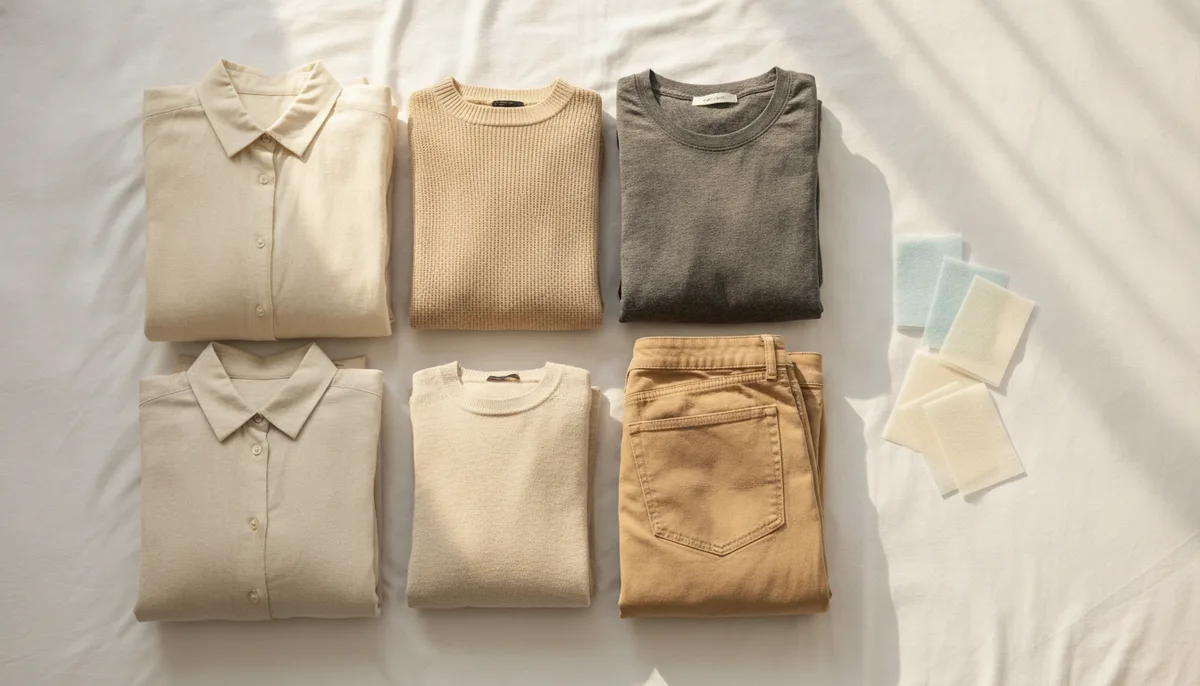
This one is non-negotiable. Never store clothes that haven't been washed. Sweat, body oils, and even invisible food residue left on fabric attract insects and cause yellowing over time. A woollen sweater that looks perfectly clean after one wear can come out of six months of storage with stains you don't remember getting.
For most cottons and synthetics, a normal machine wash works. For woollens, silks, and delicate fabrics, hand wash or dry clean before storing. Make sure everything is completely dry before it gets packed - even slight dampness leads to mildew, and in Indian humidity, that happens faster than you'd expect.
If you're dealing with items that need a deeper clean - heavy stoles, quilts, or anything that's been through a full monsoon season - consider a soak before washing. Swivo's Laundry Detergent Sheets work well here because they dissolve cleanly without leaving residue, which matters a lot for fabrics going into long-term storage. Residue left by heavy liquid detergents can attract pests or stiffen fabric over months.
Step Three: Choose the Right Storage Method
Not all clothes should be stored the same way. Here's a simple breakdown:
Heavy Woollens, Quilts, and Bulky Items
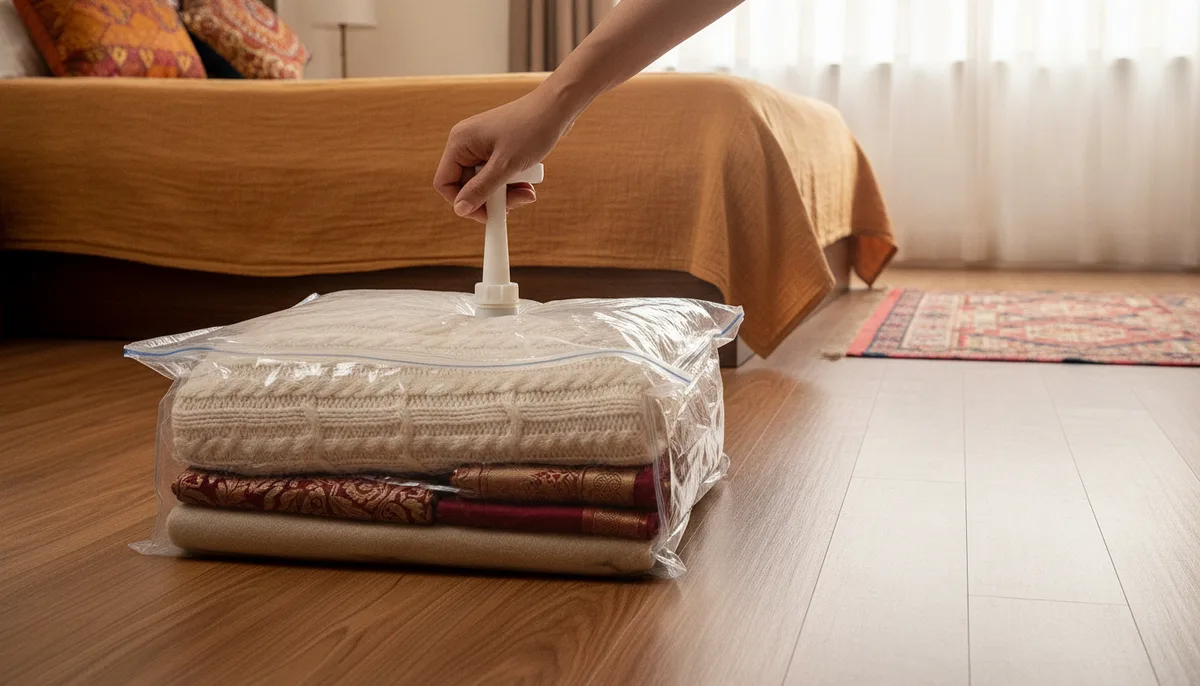
These are the biggest space-wasters in Indian wardrobes. A couple of thick shawls and a blanket can eat up an entire shelf. This is exactly where vacuum storage makes sense.
The Vacuum Storage Bag with Pump compresses bulky items down to a fraction of their size by removing the air inside. A queen-size quilt that normally takes a full shelf can be compressed down to something that slides under a bed. For households that switch between sets of heavy and light bedding across seasons, this is genuinely useful - not a gimmick.
The key is to use the included hand pump properly and to not overfill the bags. Stuff them about 70-75% full before sealing and compressing. Overpacking causes zipper stress and the bags won't seal fully.
Cotton Clothes, Kurtas, and Lighter Fabrics
These don't need vacuum storage - they're flat enough already. Use large zip-lock bags or breathable cotton storage bags (the kind that come with good quality bedsheet sets). Stack neatly and label by category. Avoid plastic bags without ventilation for anything you're storing longer than two months - moisture can build up and cause mildew.
Delicate Fabrics and Silks
Wrap individually in muslin or old cotton cloth before storing. Never store silk or delicate embroidery directly against plastic. Keep in a cool, dry part of the wardrobe - not the bottom shelf where humidity tends to collect.
Step Four: Protect Against Insects and Moisture

Indian storage conditions are genuinely hard on clothes. Silverfish, moths, and carpet beetles are real problems, especially in older buildings or during and after the monsoon. Humidity is the other enemy - particularly in coastal cities like Mumbai or Chennai.
A few practical measures:
- Use naphthalene balls or neem sachets in storage bags and at the back of shelves. Replace them every season.
- Keep a couple of silica gel packets inside sealed storage bags to absorb any moisture that gets in.
- Don't store clothes directly on the floor, even in bags. Moisture travels upward from concrete floors.
- If your wardrobe is against an exterior wall, leave a small gap between the back of clothes and the wall - especially during monsoon months.
For the wardrobe itself, wipe down shelves with a dry cloth before restocking for the new season. If there's any musty smell, air the wardrobe out for a day with the doors open before putting things back in.
Step Five: Label and Organise for Easy Retrieval
This is the step most people skip and then regret. You pack everything neatly, compress the woollens, store the quilts under the bed - and six months later you're tearing through three bags trying to find one specific kurta.
Label every bag. You don't need anything elaborate - a strip of masking tape with a marker works fine. Write what's inside and roughly when you packed it. If you're using vacuum bags, take a photo of what went in before you seal them, and stick the photo to the outside of the bag with tape.
Group storage by person and by type. One section of under-bed storage for heavy bedding, one for woollens, one for off-season clothes per family member if you have the space. When the season changes, you know exactly what to pull out and where it is.
When to Actually Switch Out Seasonal Clothes
India doesn't have clean seasonal transitions, but there are rough points where it makes sense to rotate:
- March to April: Pack away woollens, quilts, and heavy shawls. Pull out summer cottons and linens.
- October to November: Reverse the process. This usually lines up with post-Diwali when you're doing a reset of the home anyway.
- Post-monsoon (September): A good time to air out and re-evaluate anything that's been sitting in storage through the humid months.
If you have kids, build in a growth check every time you rotate. Children's off-season clothes should be tried on before they go into storage - not after you've pulled them out and the season has already started.
Making the Most of Limited Space
If your home has a compact wardrobe or shared storage, the priority is maximising vertical space and using the areas most people ignore - under beds, the top shelf of the wardrobe, and inside suitcases.
Vacuum-compressed bags are particularly good for under-bed storage because they lie flat. Suitcases you only use for travel can store off-season clothes in the meantime - just make sure they're clean and dry before you pack them in.
A well-organised seasonal storage system takes about two to three hours to set up properly the first time. After that, each seasonal switch takes maybe thirty minutes. That's a reasonable investment for a wardrobe that actually works year-round.