
Why Cleaning Supply Organisation Actually Matters
You probably clean reasonably well. But if your cleaning supplies are shoved under the kitchen sink in a pile, or scattered across three different rooms, you're losing time every single time you clean. You spend two minutes hunting for the right cloth. The mop falls over and takes the bucket with it. You buy a new scrubber because you forgot you already had one.
This is not a minor inconvenience - it adds up. In an average Indian home with daily wiping, weekly mopping, and monthly deep cleans, disorganised supplies can waste 15 to 20 minutes per cleaning session. That's real time. Sorting this out once saves it repeatedly.
This guide covers every common storage zone in an Indian home: the kitchen, the bathroom, the utility area, and the storage room. Pick what applies to your setup and ignore the rest.
Start With a Full Audit

Before you reorganise anything, pull everything out and lay it flat. Every cloth, sponge, bottle, brush, and mop. You'll probably find things in three categories:
- Still useful: Clean, functional, not expired
- Borderline: Working but worn - worth replacing soon
- Dead weight: Broken handles, torn cloths, dried-out sponges, half-empty bottles of things you never use
Throw out the dead weight immediately. Don't set it aside to think about. It will go back into the pile and confuse you again in three months.
This step also tells you what you actually need to restock. If you've been getting by with one good cloth and four bad ones, now you know to buy two good cloths and nothing else.
Kitchen Cleaning Zone: Keep It Close But Contained
The kitchen needs the most frequent access to cleaning supplies - daily at minimum. That means the things you use every day should be within arm's reach, not buried behind the LPG cylinder.
Under-the-Sink Setup
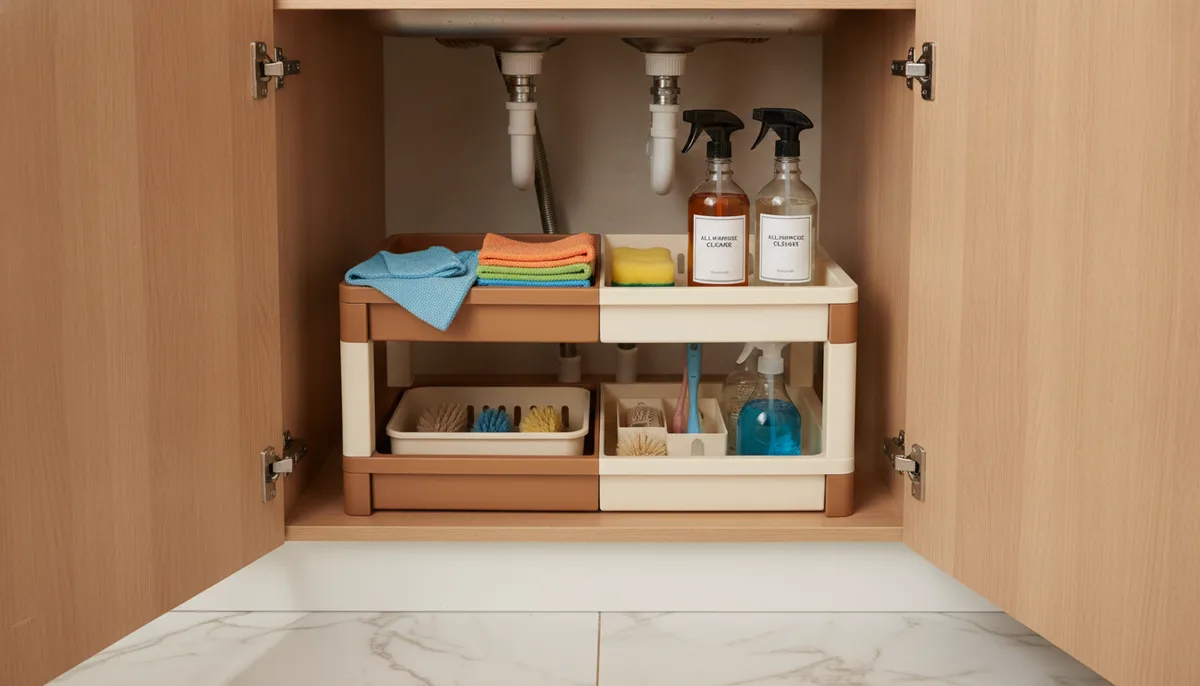
This is the standard Indian kitchen storage spot for cleaning supplies, and it works if you use it deliberately. A two-tier tension shelf or a simple plastic organiser makes the space far more usable than stacking things on the floor of the cabinet.
Keep daily-use items on the top shelf: dish scrubbers, cleaning cloths, a small spray bottle of your cleaning solution. Items used less frequently - like spare sponges or a concentrate bottle - go on the lower shelf or pushed to the back.
The Space Sponge works well here because it doesn't hold water between uses, which means it won't smell or go mouldy sitting in a closed cabinet. Rinse it, squeeze it dry, and it's ready next time without any unpleasant surprise.
Counter-Level Tools
Dishwashing rags or scrubbing cloths that you use multiple times a day shouldn't live in a drawer. Hook them over the tap or use a small dish drainer clip on the sink edge so they air-dry between uses. A wet cloth stuffed in a drawer is how things start smelling in a warm Indian kitchen.
If you use multipurpose rags for both wiping counters and scrubbing pots, keep them visually distinct - different colours help. The Multipurpose Wire Dishwashing Rags come in a set and are built to handle both wet scrubbing and dry wiping, so you can assign specific pieces to specific tasks and stick to the system.
Bathroom Cleaning Zone: Small Space, Smart Setup
Bathroom cleaning supplies often end up inside the bathroom itself, which makes sense for quick access but creates clutter in an already tight space. A few adjustments help a lot.
Vertical Storage Over Floor Storage
If you're storing a toilet brush, a scrubbing cloth, and a tile cleaner bottle on the floor of your bathroom, that floor gets harder to clean properly. Use a small over-door organiser or a wall-mounted caddy to move these items off the floor.
Keep only what you use weekly or more often in the bathroom itself. Deep-clean items like a grout brush or a heavy-duty descaler can live in a central supply cupboard and come into the bathroom only on deep-clean day.
Label or Colour-Code Spray Bottles
Refillable bottles all start to look the same after a week. If you're using a concentrate-based cleaner, a piece of masking tape and a marker is all you need. Write the contents and the dilution ratio on the bottle. This takes 30 seconds and saves you from accidentally using the wrong solution on the wrong surface.
Utility Area and Mop Storage: The Hardest Zone to Keep Tidy
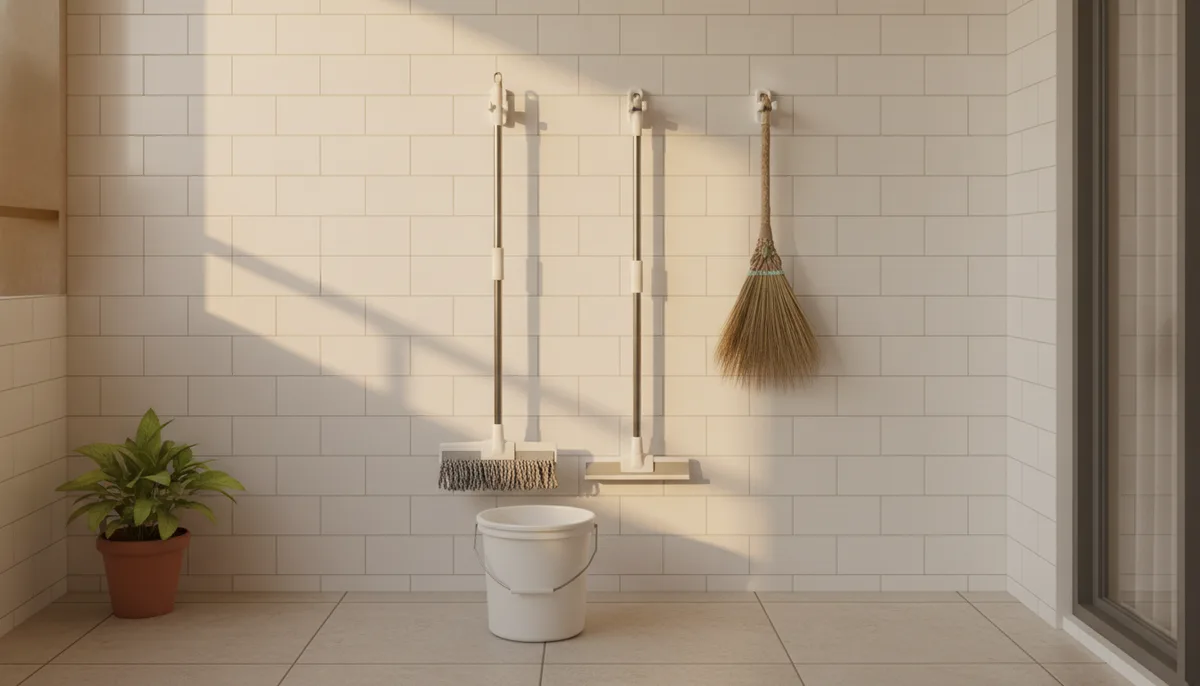
Mops, brooms, and buckets are awkward to store neatly because they're bulky and oddly shaped. Most homes end up leaning them against a wall in the utility area or balcony, which means they tip over regularly and collect dust at the top.
Wall Hooks or a Freestanding Holder
A simple wall-mounted broom holder with clips (available at any hardware store for under Rs. 200) keeps mops and brooms upright and off the floor. This protects the mop head from sitting in residual dirty water, which is probably the main reason mops start to smell over time.
If wall mounting isn't an option, a tall plastic dustbin or a narrow bucket placed in a corner works as a makeshift holder for broom and mop handles.
Mop Pad Storage
If you're using a flat mop system with replaceable pads, store the clean pads separately from the mop itself - not clipped to the mop between uses. Stack them flat in a small basket or ziplock bag so they stay clean and don't pick up dust sitting in a corner. The Mop Pads (Pack of 5) are easy to rotate this way - wash a set, fold them, store them ready to go for the next cleaning session.
Central Cleaning Cupboard: The One-Stop System
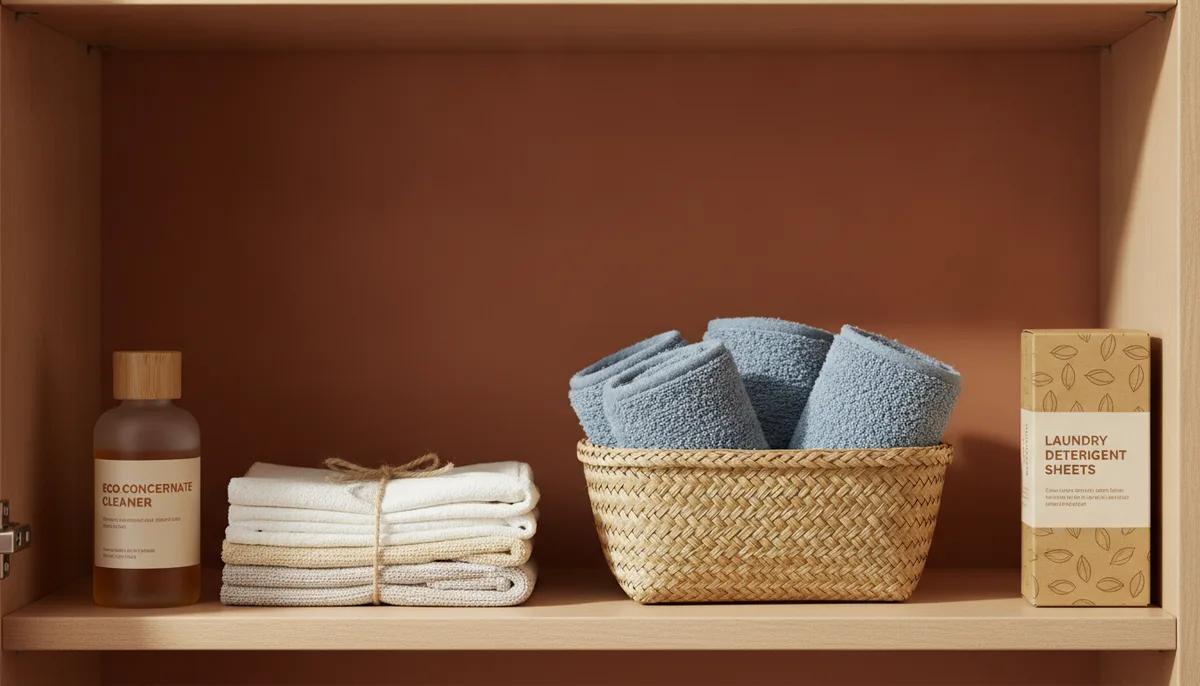
If your home has a utility cupboard or a dedicated shelf in the storage room, this is where your backup supplies and less-frequent-use tools should live. Think of it as your cleaning inventory - not the daily access point.
What Goes Here
- Spare cleaning cloths and sponges not yet in use
- Refill bottles and concentrate cleaners
- Seasonal tools like the Activated Charcoal Ceiling Fan Filters that you swap in once or twice a year
- Vacuum storage bags for seasonal items
- Laundry supplies like detergent sheets that don't need daily access
The One-In-One-Out Rule
The easiest way to keep this cupboard from becoming a dump-all is a simple restocking rule: when you take a replacement item from the cupboard to use in the kitchen or bathroom, note it down (or mentally flag it) to reorder. You should never open this cupboard and find it empty when you need something - but equally, you shouldn't find ten of the same thing buried under each other.
Monsoon and Humidity Considerations
Indian homes, especially in cities like Mumbai, Chennai, and Bangalore during the monsoon months, deal with humidity levels that affect how cleaning tools store and last. A few adjustments for this season:
- Never store damp cloths or sponges in closed cabinets during monsoon. They will go mouldy within 24 hours.
- Leave cabinet doors slightly open or use a small silica gel packet in your cleaning supply cupboard to absorb moisture.
- Mop heads dry much slower in monsoon humidity - hang them outside or under a fan rather than in the utility room.
- Check sponges and cloths more frequently in these months. What lasts two weeks in summer may need replacing in a week during peak humidity.
The Simplest Rule of All
Every cleaning tool you own should have one fixed home. Not two possible spots. One. When you finish using it, it goes back to exactly that place. This sounds obvious but most homes don't actually follow it, which is why the mop ends up in three different rooms depending on who used it last.
Set the system up once, clearly enough that anyone in the house can follow it without asking. After two weeks it becomes automatic, and cleaning stops feeling like a scavenger hunt every time.