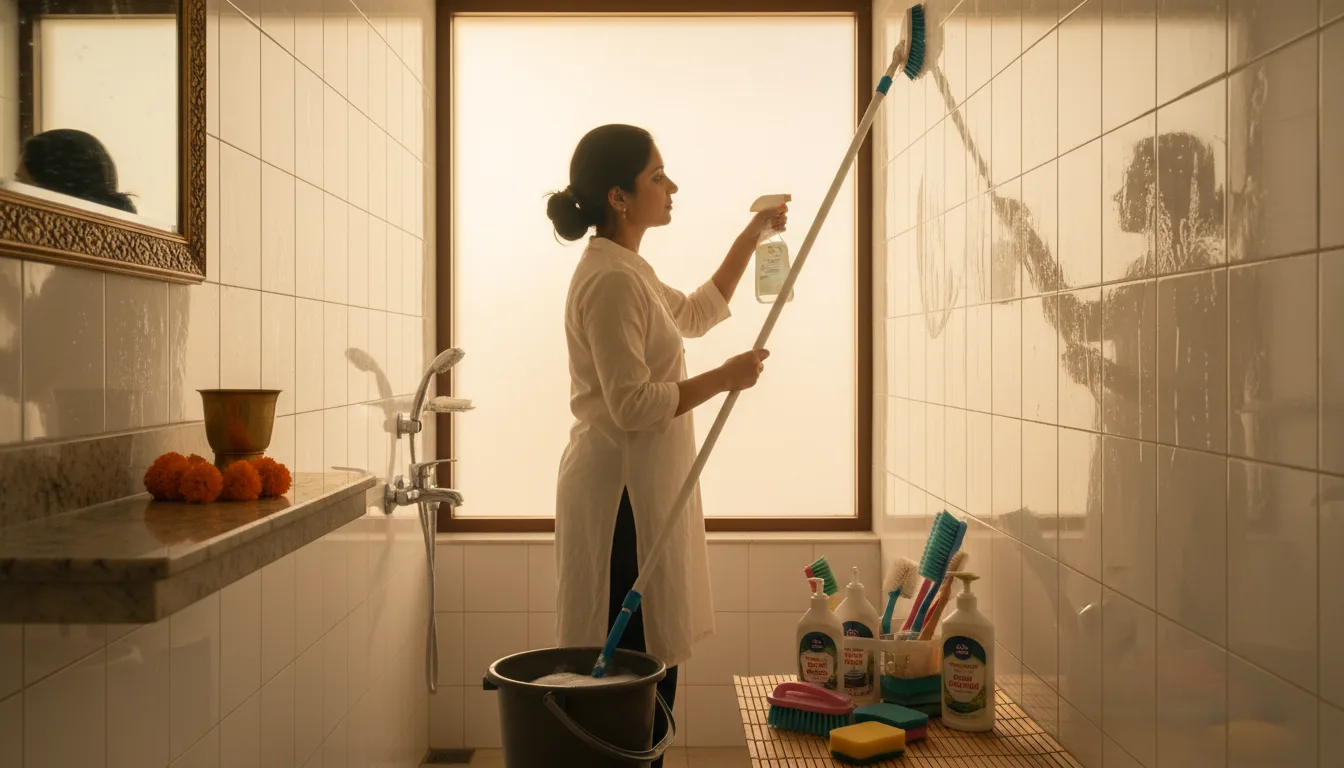
Why Indian Bathrooms Are Harder to Clean Than You Think
If you've ever scrubbed a bathroom tile for ten minutes only to have it look almost the same as before, you're not doing it wrong - you're probably using the wrong tools. Indian bathrooms deal with a specific combination of problems: hard water that leaves white mineral deposits, high humidity that encourages mildew on grout, heavy soap usage that builds up scum fast, and floors that see a lot of wet traffic daily.
Add to that the fact that most Indian homes don't have ventilation windows in bathrooms, and you've got a room that needs more thoughtful cleaning than a quick mop and spray. This guide covers a practical routine - weekly and monthly - that actually clears the grime instead of just moving it around.
The Right Order Makes a Big Difference
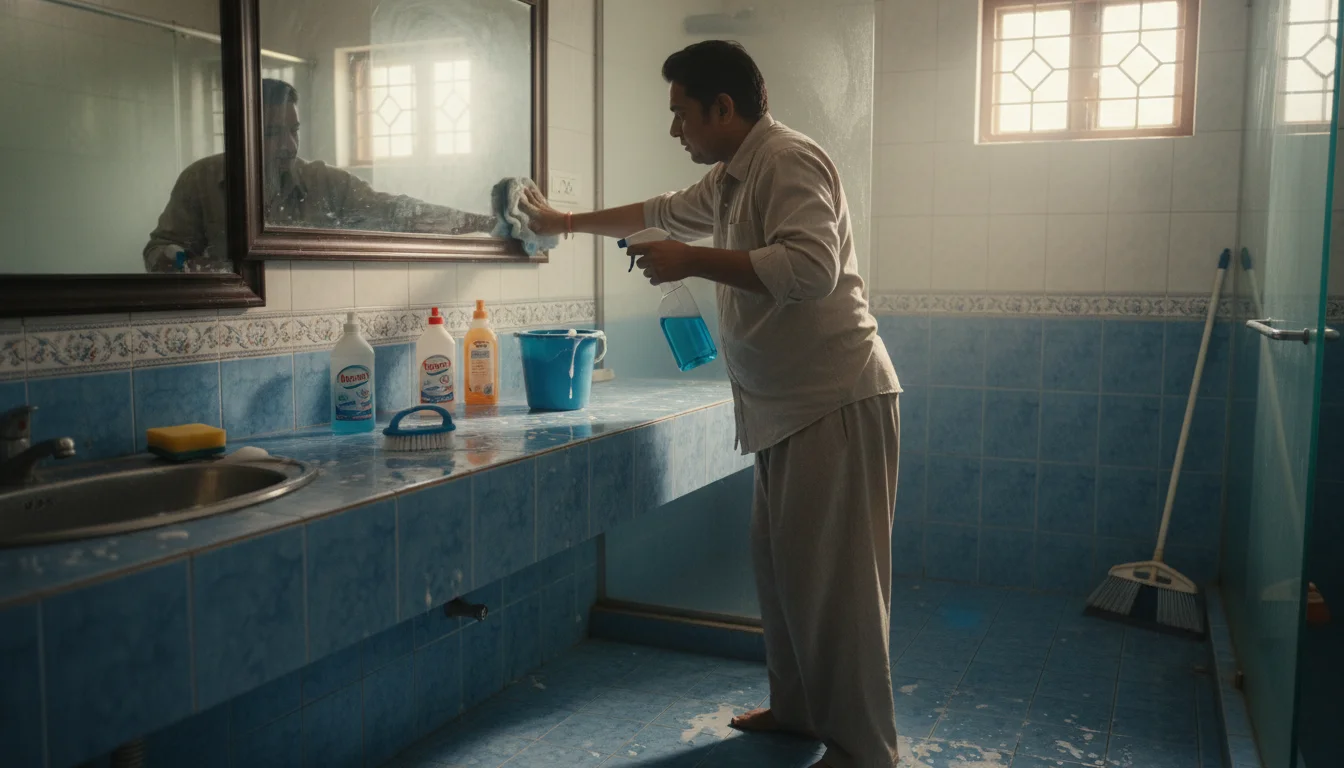
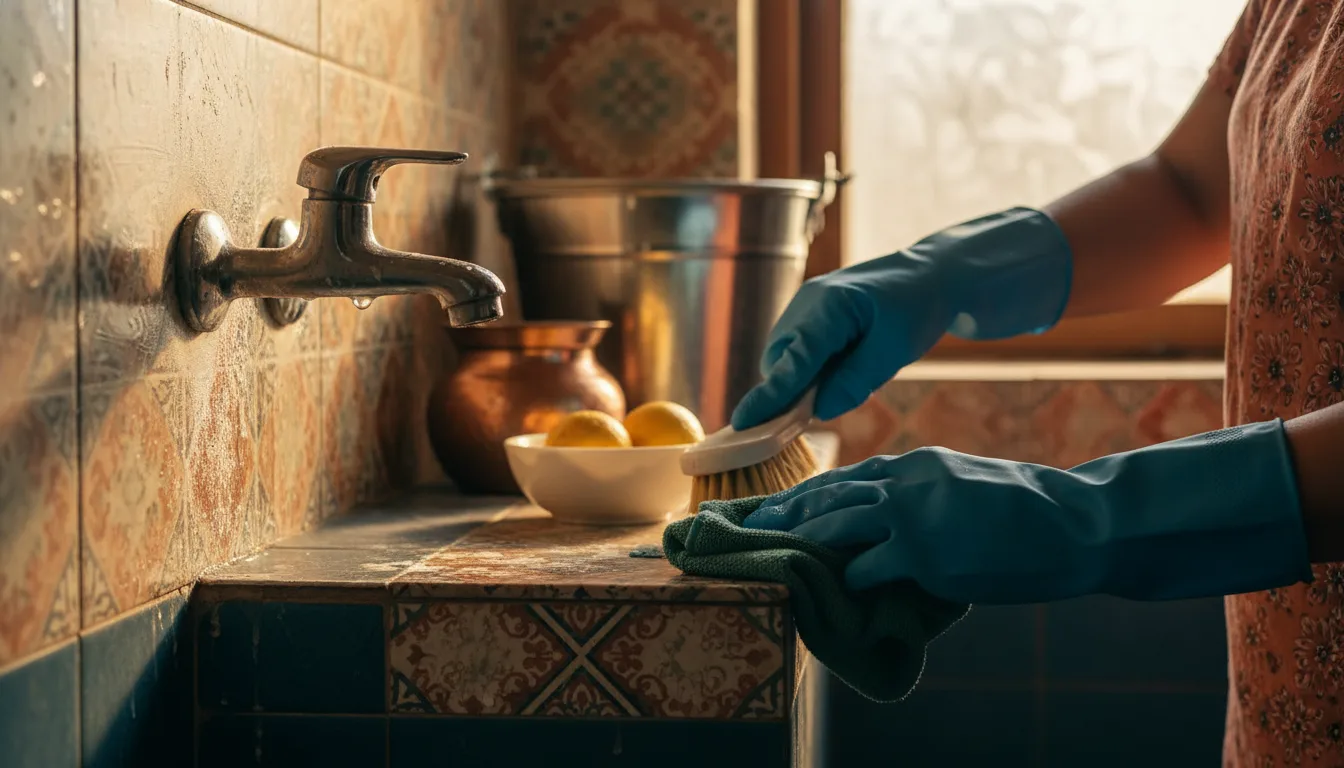
Indian bathroom cleaning routine in progress with spray bottle and cloth on tile counter
Cleaning a bathroom randomly wastes time. The order you follow determines whether you're cleaning efficiently or just redistributing dirt. Here's the logic behind a smart sequence:
Start at the top - Clean the exhaust fan, light fixtures, and any shelving first. Dust and debris fall downward, so you don't want to clean the floor first.
Work on walls and tiles next - Soap scum and hard water marks on tiles need time to loosen. Apply your cleaner and let it sit while you move to other areas.
Tackle the toilet - Apply cleaner inside the bowl and let it soak. Clean the outside while it works.
Sink and taps last (among the fixtures) - These get contaminated again while you're cleaning other things, so do them near the end.
Floor last - Always. This is where all the dirt ends up.
Weekly Bathroom Cleaning: What You Actually Need to Do
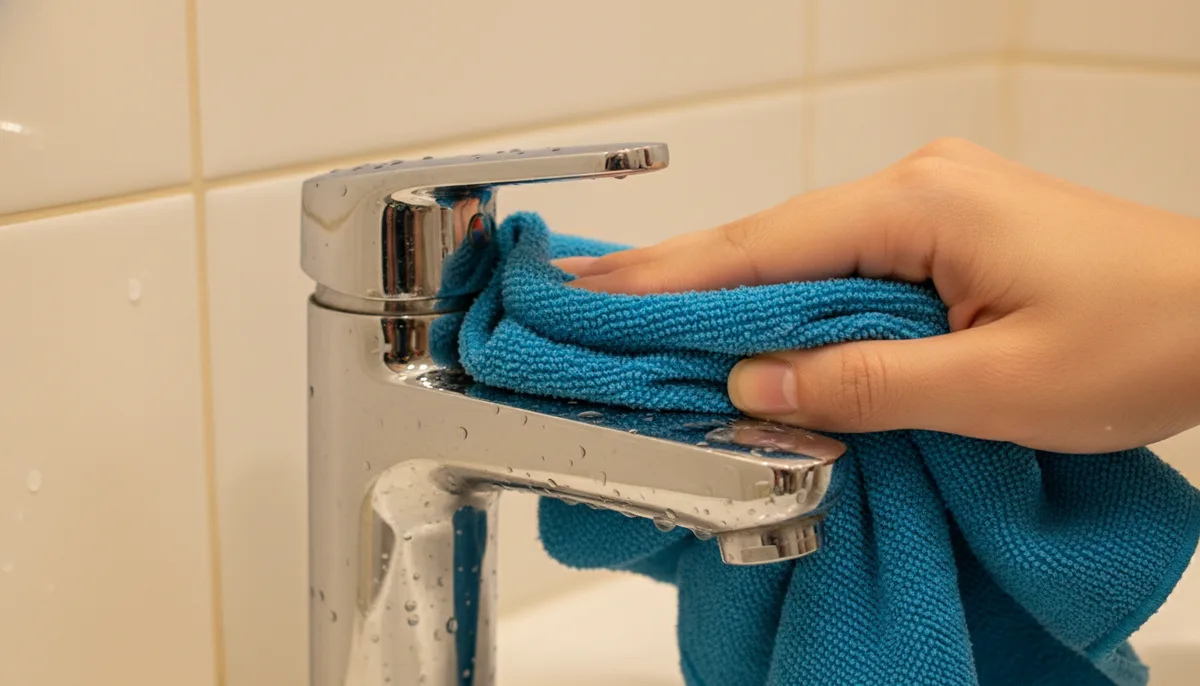
Hand wiping chrome bathroom tap with microfibre cloth removing soap scum
A weekly clean doesn't have to take more than 20-25 minutes if you stay on top of it. Here's what to cover:
Tiles and Walls
Soap scum builds up faster than most people realise. A microfibre cloth works far better than a regular rag here because it actually lifts the film instead of smearing it. The Magic Cleaning Cloth works well on bathroom tiles - it picks up the soapy residue and mineral haze without scratching the surface. Use it damp, not soaking wet, and wipe in consistent strokes rather than circular scrubbing.
For stubborn hard water deposits around taps and the shower area, a drop of dish soap on the cloth helps break the bond. If the deposits are older and more calcified, you'll need to address them as part of your monthly deep clean.
Toilet Cleaning
Apply your toilet cleaner under the rim and let it sit for at least 5 minutes before scrubbing. While it soaks, wipe down the tank, lid, seat, and the outside of the bowl with a separate cloth. Many households keep a dedicated rag for this - a reasonable call. Just make sure it's rinsed and dried properly after use, or it becomes a source of odour and bacteria itself.
Sink and Tap Area
Indian sinks collect toothpaste residue, soap film, and hard water marks faster than almost any other surface in the house. A quick wipe-down with a damp cloth works for the daily or every-other-day touch-up, but for the weekly clean, spend an extra minute on the tap base and around the drain. These spots tend to get ignored and then become very difficult to clean once the buildup hardens.
Floors
Bathroom floors in most Indian homes are ceramic or vitrified tile, often with a textured surface to prevent slipping. That texture is great for grip but terrible for trapping dirt. A mop works better than a rag on its own here - it applies even pressure across the floor and gets into the grout lines more effectively. The Mop and Bucket Set with Wringer is worth having specifically for bathrooms and kitchens, where you need a genuinely wrung-out mop rather than a sopping wet one that just pushes dirty water around.
Monthly Deep Clean: The Spots People Skip
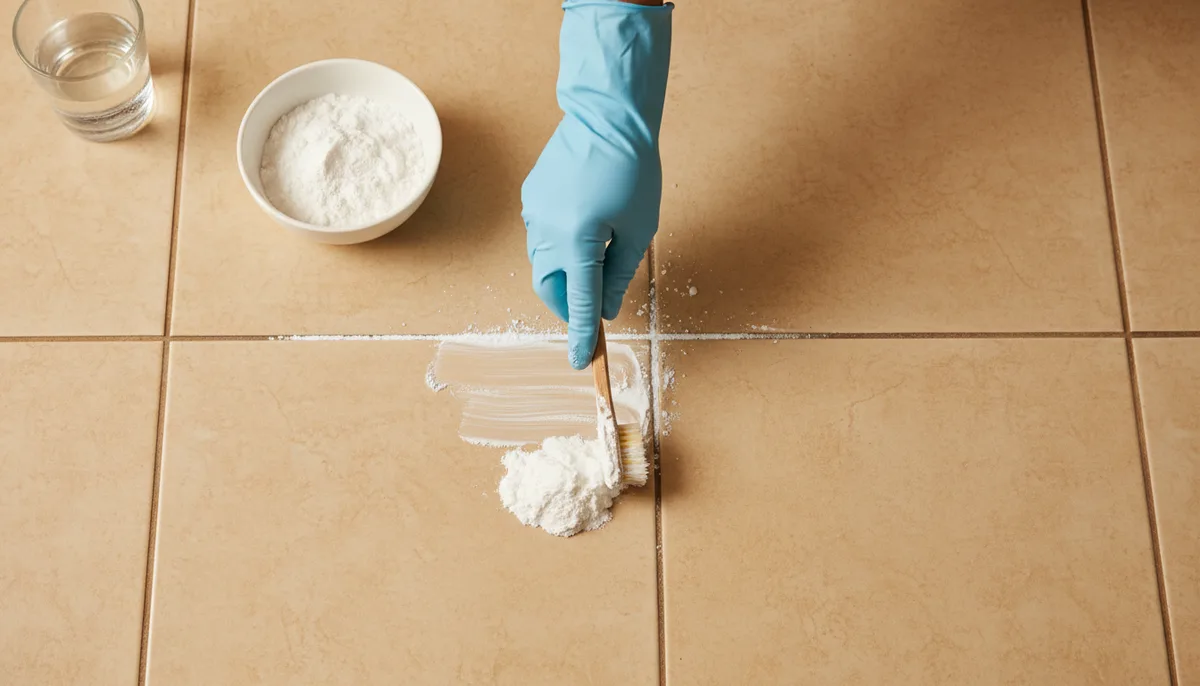
Person scrubbing bathroom grout lines with a toothbrush and baking soda paste
The weekly routine keeps things manageable, but once a month you should go deeper. Here are the areas that get ignored until they become real problems:
Grout Lines
Grout is porous and absorbs moisture, soap residue, and mildew over time. Dark or discoloured grout isn't just unsightly - it signals that mildew has set in. An old toothbrush works for scrubbing grout lines with a paste of baking soda and water. Apply, let it sit for 10 minutes, scrub, then rinse. For bathrooms without windows or with poor airflow, do this every three weeks instead of monthly.
Exhaust Fans and Ceiling Area
Exhaust fans collect dust and lint rapidly, and once the filter is clogged, the fan can't do its job - meaning more humidity stays in the bathroom. Take the cover off monthly, wash it, and wipe down the fan blades. Check the ceiling corners for any signs of mold, particularly if your city gets heavy monsoon seasons. Bathrooms in coastal cities like Mumbai or Chennai are especially prone to this.
Drain Cleaning
Pour hot water with a little baking soda and vinegar down the drain monthly to keep it clear and odour-free. If you notice slow drainage, address it before it becomes a blockage. Hair and soap build up fast in bathroom drains and are much easier to clear early than later.
Shower Head Descaling
Hard water deposits clog shower head holes over time, reducing water pressure. Fill a plastic bag with a vinegar solution, tie it around the shower head so it's submerged, and leave it for an hour. The mineral deposits loosen and can be wiped away easily after. Do this once a month if you're in a hard water city like Bangalore, Delhi, or Hyderabad.
Keeping It Clean Between Sessions
The real trick to a clean bathroom is reducing how quickly it gets dirty again. A few habits help a lot:
Wipe down the sink after use - 10 seconds with a damp cloth prevents soap film from building up.
Keep a small squeegee in the shower - Running it over wet tiles after a shower dramatically reduces water marks and soap scum accumulation.
Dry the floor after bathing - Wet floors in enclosed bathrooms lead to mildew faster than almost anything else. A quick dry with a dedicated floor cloth helps.
Don't store too many products on wet surfaces - Shampoo bottles, soap dispensers, and razors left on wet ledges leave rings and trap moisture. Use a caddy or shelf that allows airflow underneath.
The Tools Worth Having for Bathroom Cleaning

Flat lay of bathroom cleaning tools including microfibre cloths and mop on white surface
You don't need a cabinet full of products. A few reliable tools handle most bathroom cleaning jobs:
For surfaces, a good microfibre cloth covers tiles, mirrors, counters, and fixtures. The Space Cloth (pack of 3) works well here because you can dedicate one cloth to the toilet area, one to the sink and tiles, and one to mirrors and fixtures - without cross-contamination. Having separate cloths per zone is a simple habit that makes a real difference in hygiene.
For stubborn scrubbing jobs on surfaces like soap dishes, drain covers, or the toilet exterior, something with a bit more abrasion helps. The Multipurpose Wire Dishwashing Rags handle tougher residue on non-scratch-sensitive surfaces. They're especially handy for the rough underside of soap holders and drain edges where regular cloths don't get enough grip.
For the floor, a proper mop with a wringer saves you from getting on your hands and knees and ensures you're mopping with a damp mop rather than a wet one.
A Realistic Routine You'll Actually Stick To
The best cleaning routine is one you'll actually follow. Here's a simple breakdown:
Daily (2-3 minutes): Wipe sink, flush toilet with a quick rim brush, dry the floor if wet.
Weekly (20-25 minutes): Full surface clean - tiles, toilet, sink, mirror, floor mop.
Monthly (45-60 minutes): Grout scrub, drain treatment, shower head descale, exhaust fan cleaning, ceiling check.
Indian bathrooms don't need complicated chemistry or expensive gadgets. They need a consistent routine, the right sequence, and tools that are actually up to the job. Get those three things in place and you'll spend far less time cleaning and far more time with a bathroom that stays clean.