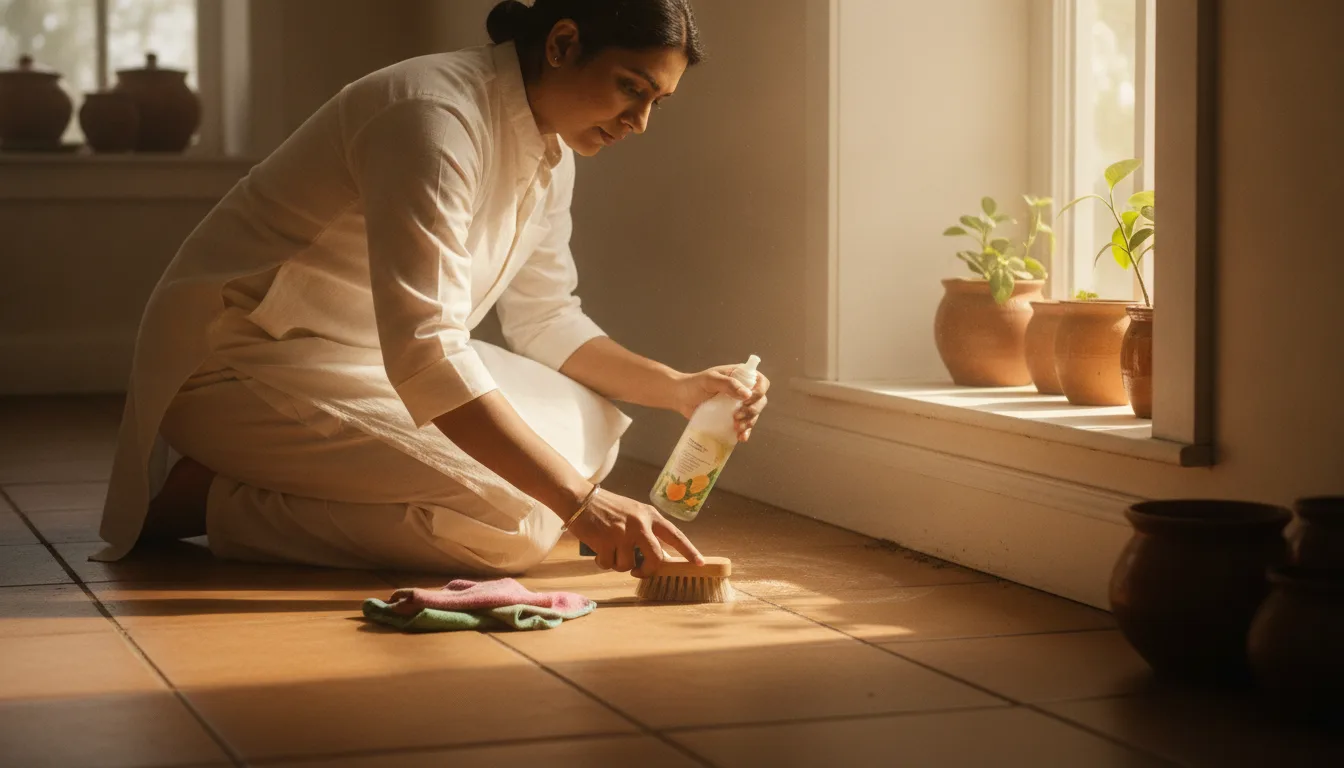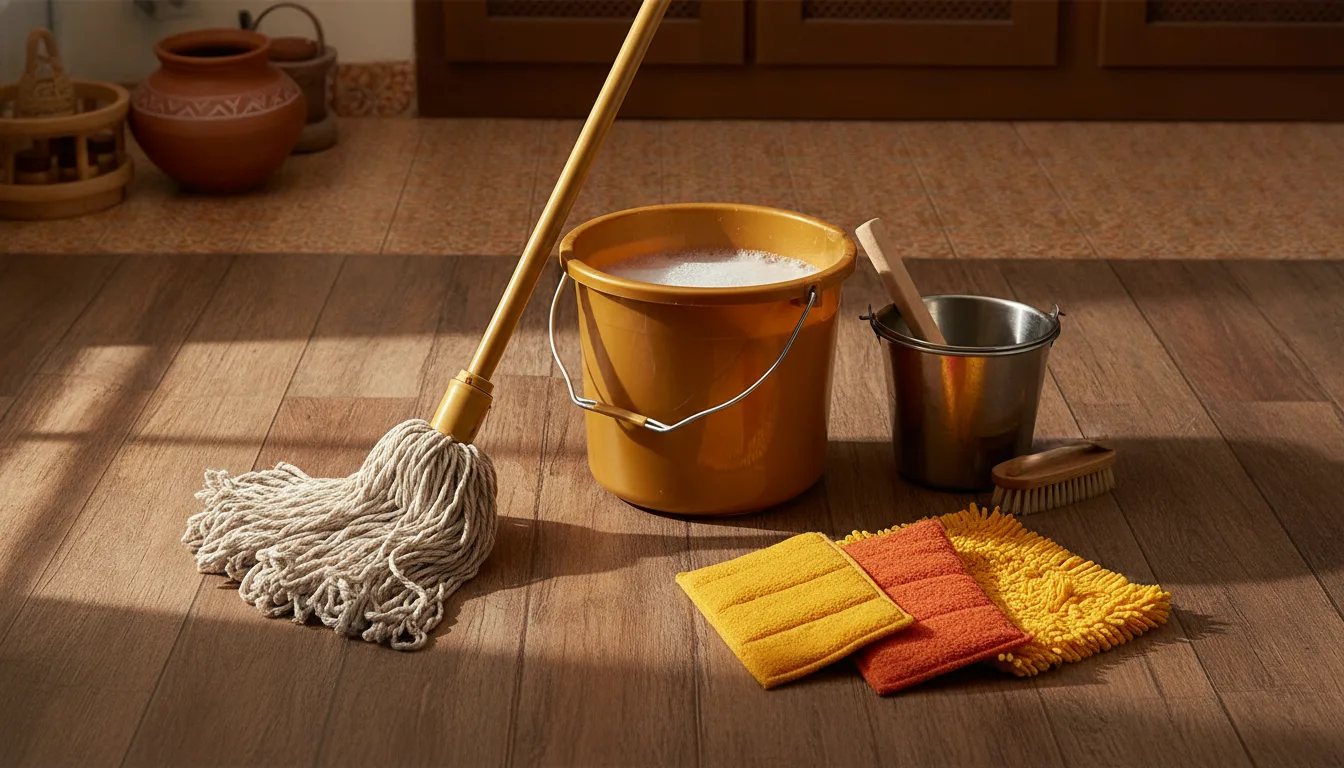

Why Indian Kitchen Storage Gets Dirty So Fast
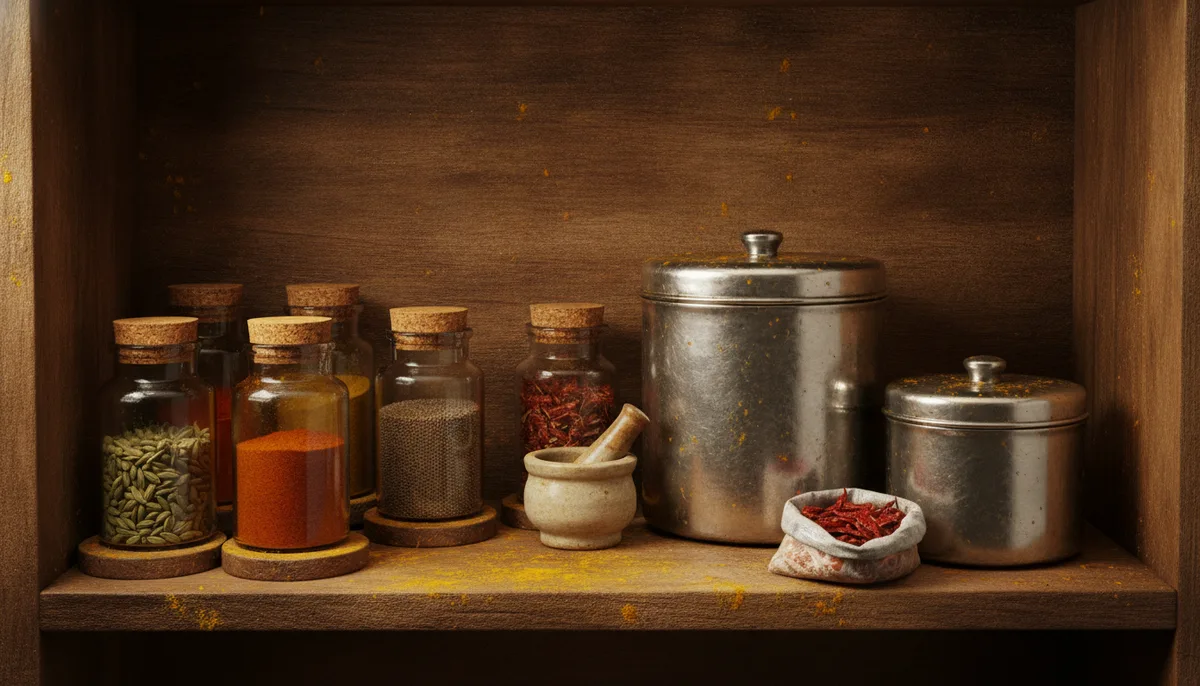
If you cook Indian food daily, your kitchen shelves are fighting a losing battle. Every time you shallow fry, pressure cook, or toast spices, tiny droplets of oil and steam float through the air and settle on every horizontal surface. Add the dust that blows in during summer, the humidity that lingers through monsoon, and the turmeric that seems to teleport itself onto everything nearby, and you have a recipe for sticky, grimy storage that regular wiping just cannot fix.
The problem is not that you are cleaning wrong. It is that most cleaning cloths and sponges are not built for this kind of layered, sticky residue. Rough scrubbers scratch cabinet paint or laminate. Wet rags just push the grease around. And most people only notice how bad it has gotten when they are cleaning before Diwali or expecting guests.
This guide focuses on one specific but neglected problem: cleaning the inside and outside of kitchen storage properly, then maintaining it so it does not become a weekend project every two months.
What You Are Actually Dealing With
Before you start scrubbing, it helps to understand what the grime is made of. Kitchen cabinet buildup is usually a mix of three things:
- Aerosolised cooking oil - this is the sticky base layer that everything else clings to
- Dust and kitchen soot - settles on top of the oil layer and hardens over time
- Spice residue and food particles - especially around where you store open jars or grind masalas
Old grease that has been sitting for weeks behaves differently from fresh grease. It polymerises slightly, meaning it bonds to the surface and gets harder. That is why wiping with a damp cloth works on fresh spills but does almost nothing on a cabinet that was last cleaned six months ago.
The solution is to break down the grease before you wipe, not to scrub harder.
Step-by-Step: Cleaning Kitchen Shelves and Cabinets
Step 1: Empty the shelf completely
This sounds obvious but most people skip it. If you clean around the bottles and jars, you will miss the worst spots and the grime will come back faster. Pull everything out, wipe the bottoms of containers before putting them back, and check for expired items while you are at it.
Step 2: Dry dust first
Before any liquid touches the shelf, knock off the loose dust. A dry Magic Cleaning Cloth works well here because it picks up dust without pushing it around. Go from top to bottom so you are not dropping dust onto already-cleaned surfaces.
Step 3: Break down the grease
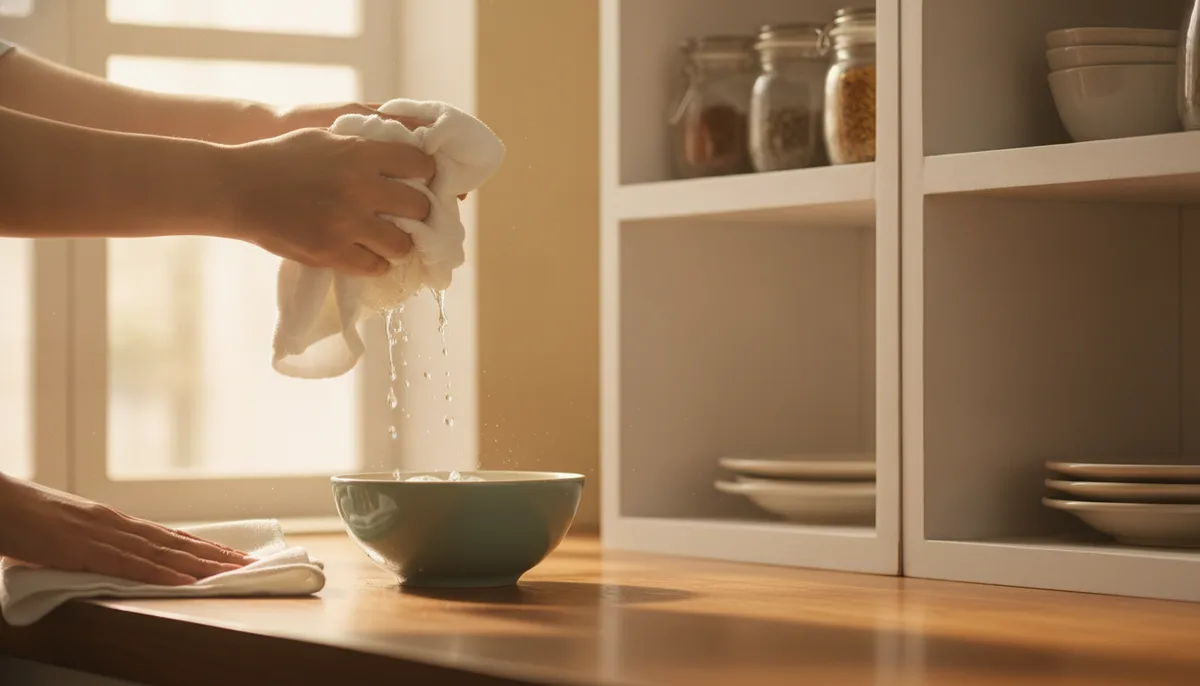
Mix one part dish soap with four parts warm water in a small bowl. You can add a tablespoon of white vinegar if the grease is particularly stubborn. Dip your cloth, wring it almost dry, and lay it flat on the greasy surface for 30 to 60 seconds before wiping. This softening step is what most people skip, and it makes a significant difference on old, hardened grease.
For very sticky patches, a drop of undiluted dish soap applied directly and left for a minute or two will lift most residue without any aggressive scrubbing.
Step 4: Get into the corners and edges
Cabinet corners, the edges around hinges, and the groove where shelves meet the cabinet wall are where grease concentrates. A regular cloth cannot reach these spots properly. The Crevice Brush is useful here because the narrow bristle head fits into tight spaces without scratching the surface. Run it along the shelf edge and inside corner joints, then wipe away with a damp cloth.
Step 5: Wipe clean and dry properly
After cleaning, go over the surface with a clean damp cloth to remove soap residue. Then dry it. This part matters more than most people realise. Surfaces left damp attract dust faster and can develop mildew in humid months. Use a dry cloth and make sure the shelf is completely dry before you put anything back.
Cleaning the Outside of Cabinets
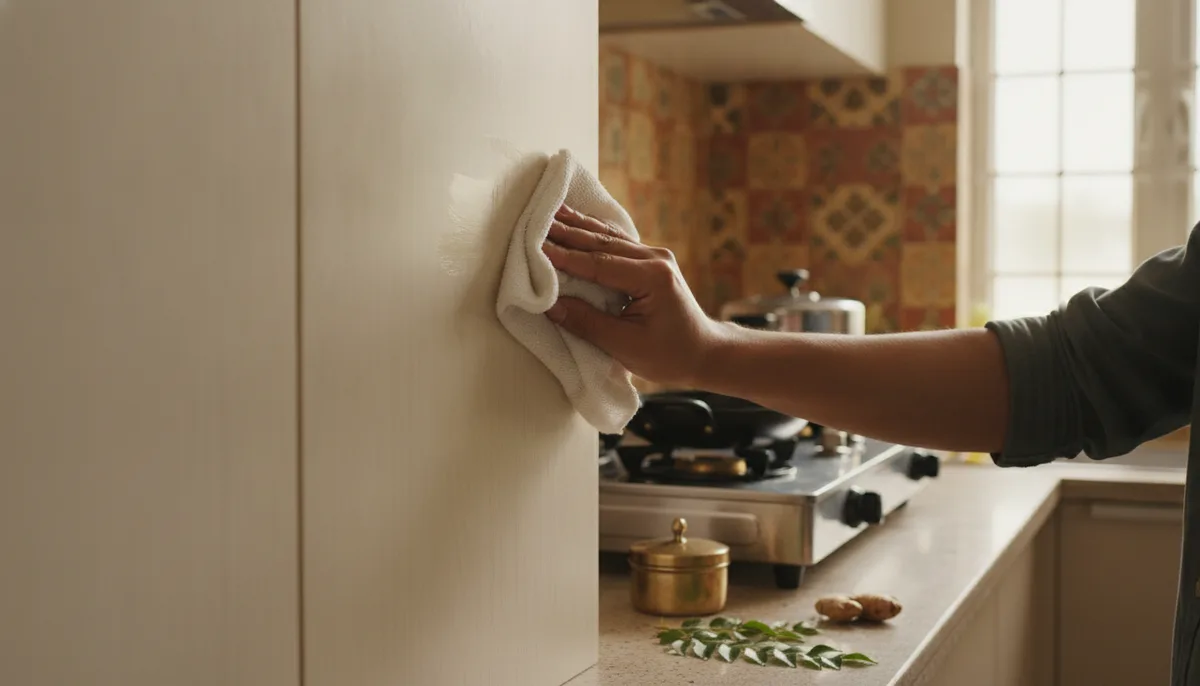
Cabinet fronts, especially near the stove, collect a thick layer of oil mist mixed with whatever particulates are floating around your kitchen. The outside of lower cabinets near the floor also picks up mop water residue over time.
The same soap-and-warm-water method works here, but be more careful about the material. Laminate and painted finishes can get damaged by excess water or harsh scrubbers. Use a well-wrung cloth rather than a soaking wet one, and avoid abrasive pads on smooth cabinet fronts.
The Space Cloth is worth having for this job. It is gentle enough not to scratch laminate but effective enough to cut through the greasy film on cabinet doors without needing much pressure. A little warm water and one wipe usually does it for regular maintenance cleaning. For heavier buildup, add a small drop of dish soap.
Drawer Cleaning: The Step Everyone Forgets
Drawers collect crumbs, spice powder, oil from utensils, and sometimes moisture from wet hands. Pull them out completely if you can. Most Indian kitchen drawers are designed to be removable.
Tip them upside down and tap to loosen crumbs before washing. For the drawer interior, a damp cloth followed by a dry wipe is usually enough for regular cleaning. For drawers that hold spices or dry goods, check the corners carefully. Spice powder that gets damp then dries can harden into a cement-like residue that takes some patience to remove.
Line your drawers with shelf liner or even old newspaper after cleaning. It makes the next clean much easier because the liner absorbs most of the mess and can be replaced in seconds.
How Often Should You Actually Do This
A full empty-and-clean for every cabinet is a once every two to three months job for a household that cooks daily. But a quick wipe-down of cabinet fronts and frequently accessed shelves should be part of your weekly kitchen clean. Five minutes of maintenance per week saves you a full afternoon of deep cleaning every quarter.
Here is a simple breakdown:
- Weekly: Wipe cabinet fronts near the stove and countertop-level shelves
- Monthly: Pull out items from the most-used shelves and wipe the shelf surface
- Every 2 to 3 months: Full empty-and-clean of all cabinets, including corners and drawer interiors
Keeping Shelves Cleaner for Longer
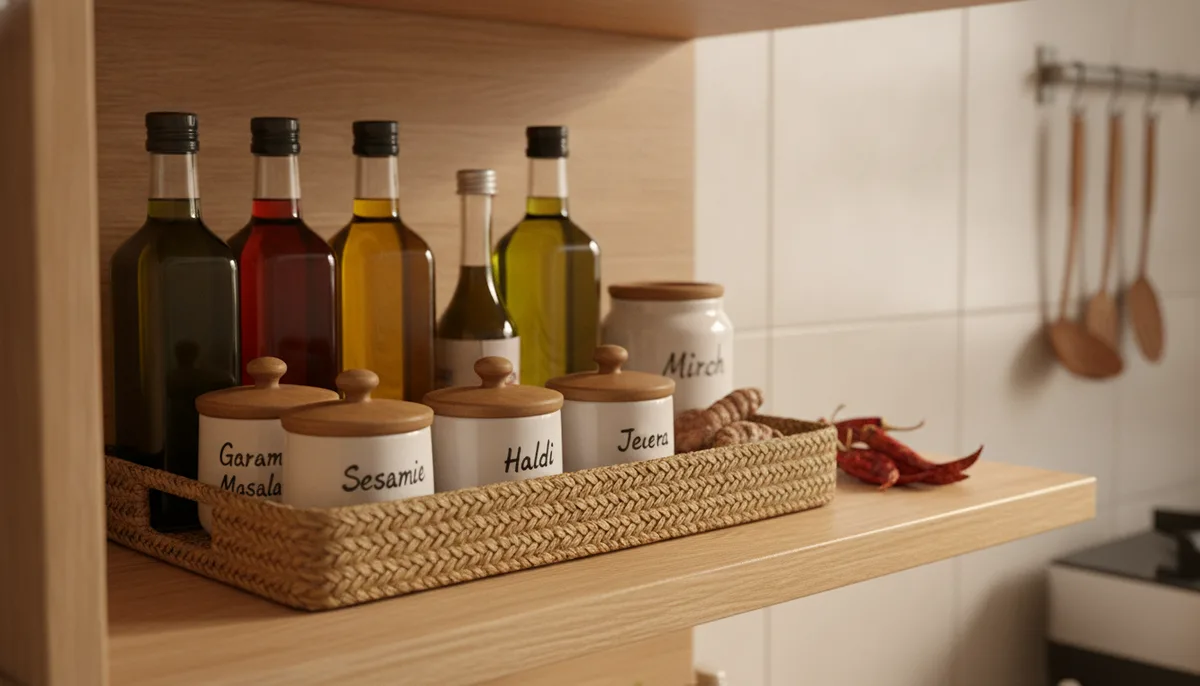
A few small habits cut down how fast shelves get dirty again:
- Use a lid or splatter guard when frying. It reduces how much oil mist spreads through the kitchen.
- Store open bottles and containers inside a tray or basket. When something spills, it stays contained and you only need to clean the tray.
- Wipe down oil bottles and masala jars before putting them back on the shelf. The outside of those containers is often coated in a thin layer of oil and is one of the main reasons shelves get sticky.
- Make sure your kitchen is ventilated while cooking. Even opening a window reduces the amount of aerosolised oil that settles on your storage.
One Honest Note About Cleaning Products
You do not need a different spray for every surface. A good quality dish soap diluted in warm water handles most kitchen grease effectively. The difference between a clean shelf and a grimy one is usually technique and frequency, not the product you are using.
What does matter is having the right cloths and tools so the cleaning actually works without damaging your cabinets. A cloth that scratches laminate or a sponge that falls apart after two uses is not saving you money. It is just adding to the frustration.
If you want to simplify things further, the Sutra Cleaning Kit includes a concentrated cleaner designed for tough kitchen residue, which works well on surfaces that have not been cleaned in a while and need something stronger than diluted dish soap alone.
Clean shelves are not about aesthetics. In an Indian kitchen that handles heavy cooking daily, clean storage means your food containers are not picking up grease or contamination, your drawers open and close properly, and you actually know what is on your shelves because you can see it. That is a practical outcome worth a few minutes a week.